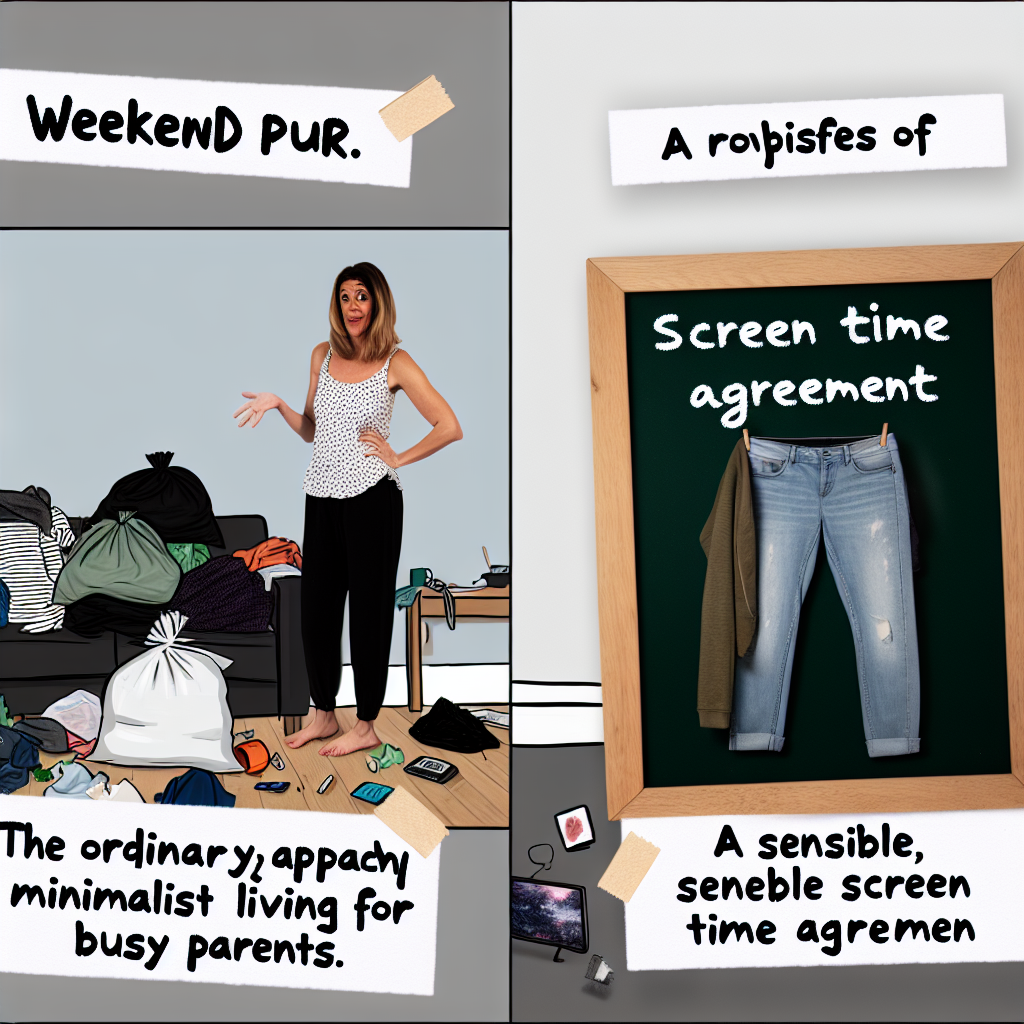
# The myth of having it all (and the Lego avalanche that proves otherwise)
Last Tuesday I opened our front closet to grab a coat and was greeted by a tidal wave of preschool backpacks, two unmatched mittens, and a Tupperware lid that clearly belongs to some other household timeline. If “having it all” is a Pinterest board, our house is the outtakes reel: full of good intentions, half-used products, and ten things purchased because of an influencer who didn’t know we have a toddler with a penchant for eating glue.
If you’re juggling daycare pick-ups, email triage, and the constant parade of “must-haves” on social media, you’re not alone. The good news: you don’t have to overhaul your life overnight. Minimalism for families isn’t about austere living rooms and zero toys; it’s about *less stuff, less noise* — more breathing room, fewer decisions, and a home that actually supports the chaos called your life.
## Why downsizing works when life shifts (and feels messy at first)
Big life changes — a move, a job shuffle, kids aging out of diapers — force choices. When we moved from a four-bedroom that felt like a museum of impulse buys to a snuger home, clarity arrived in awkward bursts: nostalgia, guilt, and the discovery of a dozen dust-covered novelty mugs.
Start small. My family committed to one dedicated weekend: everyone pulled clothes, toys, and duplicate kitchen items into piles for donation. The kids cried over a stuffed llama (we kept it — emotional triage matters), but we came away with three kitchen drawers worth of breathing room. Downsizing isn’t fast or neat. Expect surprise and relief in equal measure.
Practical tip: work in zones. Keep only what fits the function of each area. Kitchen: tools you actually use. Living room: comfy seating and a couple of current toys. Bedroom: bedding that helps you sleep, not stare at a cluttered dresser.
## The replacement-only rule (your wallet will thank you)
Here’s a simple rule that saved us from becoming a landfill of single-use gadgets: if something breaks, replace it; otherwise, pause. Try a no-buy month for nonessentials. Exempt the basics (groceries, diapers, baby formula), but nix merch, novelty gadgets, and impulse buys. Pair this with a tiny daily donation goal — one item a day. It sounds laughable until you realize 30 items gone in a month is a real difference.
Personal fail: I once declared a no-buy month and then bought a “minimalist” organizer at full price because it was on sale. Minimalism is not immune to marketing. Laugh, learn, and try again.
## Wardrobe math for real life (capsule closet, not punishment)
Capsule wardrobes are for people who hate decision fatigue. Instead of chasing a magic number, do the math: how often do you do laundry? If you wash once a week and need five work shirts, aim for seven. Add sensible workout gear if you actually work out (or want to — aspirational yoga sets don’t count if they never leave the drawer).
Starter closet for busy parents: 7 casual tops, 3 nicer tops, 3 jeans/pants, 2 work trousers or skirts, 3 workout outfits, a couple of jackets. Store out-of-season clothes out of sight. Morning choices become less of a battle, and that saves precious coffee minutes.
Win: mornings are quicker. Fail: I once packed my only “nice” top for a school event and discovered it had a mystery stain. Bring backups, or accept the small catastrophe with humor and a wet napkin.
## Why screen-time tools often fail (and how to make them actually work)
Apps, timers, and parental controls are useful — until they’re not. Rules are too strict, tech gets bypassed, or one parent doesn’t enforce them. We tried a total screen ban one week. Our kids learned advanced stealth mode. I realized a ban breeds sneaking; predictability breeds cooperation.
What helped: make rules together. Our family sat down and co-created a screen plan: homework first, 60 minutes of recreational screen time on weekdays, devices in a “charging bowl” during dinner, and a weekend limit. We swapped the all-or-nothing approach for consistency.
Tactics that work:
– Co-create the rules so kids buy in.
– Replace screen time with engaging alternatives: a short walk, a craft, or a read-aloud chapter.
– Use simple systems: a physical timer, a charging bowl at dinner, or app locks that require a parent pass.
– Model behavior. If you want them to put devices down, put yours down too.
Our win: the charging bowl reduced dinner meltdowns because no one was sneaking a device under the mashed potatoes. Our fail: we forgot to charge a tablet for a long car ride and listened to “Baby Shark” on loop for two hours. Everything is a trade-off.
## Moderating noise — online and at home
Drama online and at the dinner table drains energy faster than clutter does. If a social feed or group chat keeps dragging you into arguments, treat it like a leaky faucet: try to fix the cause, and if you can’t, shut it off.
Do not be afraid to mute, unfollow, or set boundaries. At home, make a rule that screens are off for certain family times. If arguments escalate, step away and pick a calm time to talk. Emotional weather is not a good time for heavy decisions.
## Small systems, big impact
You don’t need radical upheaval. Try one of these this week:
– The one-item-a-day donation challenge. Small action, big momentum.
– A no-buy pause for nonessentials for 30 days.
– Create a starter capsule closet that matches your laundry routine.
– A family-created screen-time pact with a charging bowl and a physical timer.
Progress over perfection. I still keep a drawer of useful “maybe” items (because parenting requires contingency plans), but I’m choosier about bringing new things in. The house is less chaotic, mornings are calmer, and — most importantly — there’s more space for conversation, mess, and real life.
I’ll be honest: it’s not glamorous. There are still marker stains on the couch and a mysterious sock monster in the dryer. But choosing small, consistent rules has made a measurable difference to our family’s sanity.
What’s one small rule you’ve tried (or want to try) to cut clutter or digital noise in your home? Share the wins and the trainwrecks — we need both.