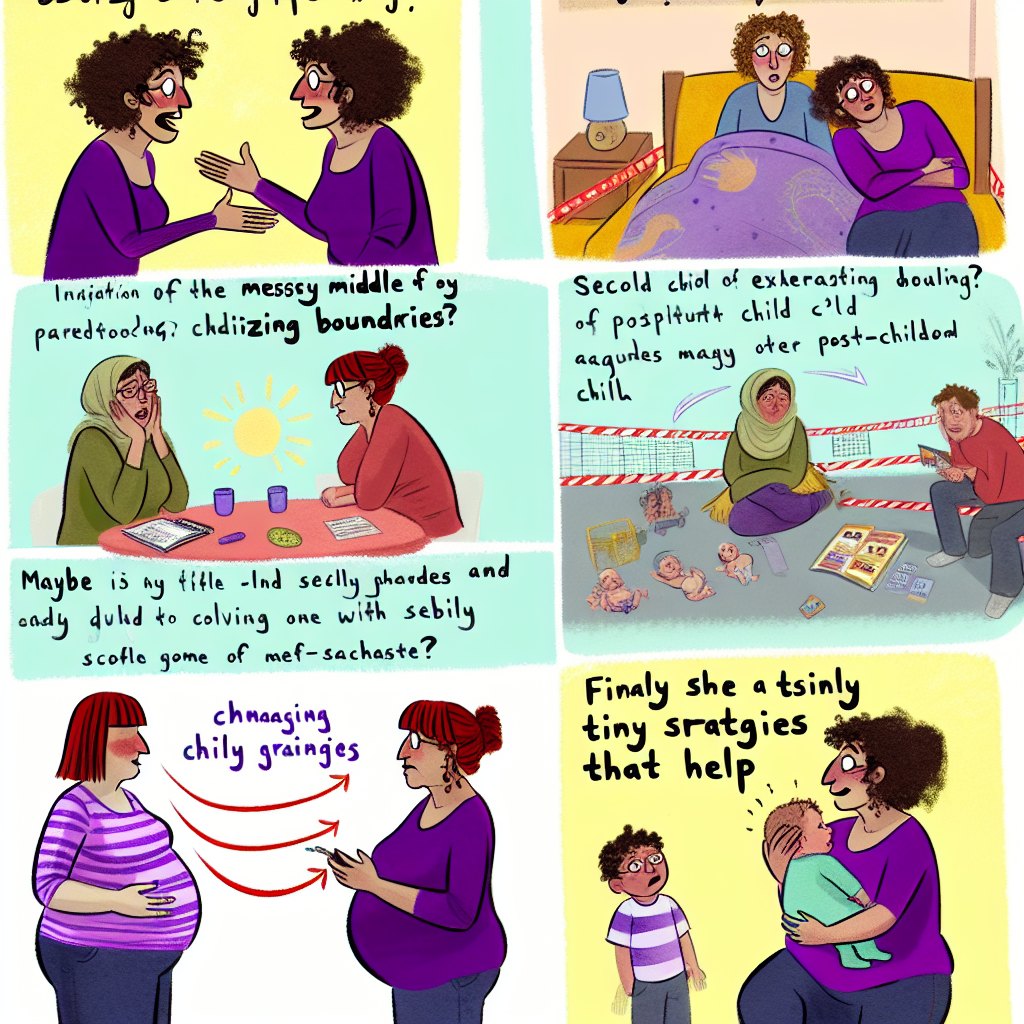
# The Real, Messy Middle of Early Parenthood — And How to Survive (and Even Thrive)
Parenthood is a beautiful, exhausting, humbling mess. One minute you’re staring at your tiny human thinking they are the most miraculous creature on earth, the next you’re whispering to your partner, “When does sleep deprivation get classified as a personality trait?” If you’re juggling a cranky partner, meddling in-laws, postpartum body changes, and a second kid who seems to be getting hand-me-down attention — welcome. You’re not failing. You’re learning.
I’ve been in that thick of it: the midnight feeds that blur into morning, the fight over who made the last bottle (it was me, obviously), the awkward dinner where Aunt Linda insists on demonstrating how she swaddled her 19 children. What helped me wasn’t perfection or Pinterest routines — it was tiny adjustments, mercy for myself, and the occasional laugh at how wildly unglamorous life had become.
## When partnerships fray: venting vs. solutions
Arguments happen. Miscommunications pile up faster than the dishes in a one-sink household. I remember a week of cold shoulders after I used the last of the formula and didn’t tell anyone — petty, sure, but it felt monumental at 3 a.m.
What actually worked:
– Validate before problem-solving. A short, “I’m exhausted and I need help” invites teamwork instead of defensiveness. It’s disarming and oddly clarifying.
– Schedule a 10-minute check-in. Once or twice a week, no phones, no multitasking, just logistics and feelings. You’ll save emotional energy that would otherwise be spent re-hashing the same fight.
– Use specific asks. Replace vague complaints with concrete tasks: “Can you handle baths on Tuesdays and Thursdays?” It’s easier to say yes to a clear, small request than to an amorphous accusation.
If you need to vent, pick a safe outlet — a trusted friend, a parent group, or a private journal. Let it be raw, then pair the rant with one ask you can make of your partner. Venting without action tends to loop you back into resentment.
## Smoothing family friction: in-laws and boundaries
Relatives mean well and will still overstep. My mother-in-law once rearranged our nursery because she “saw a better feng shui.” She meant well. I screamed internally.
Try this:
– Decide your non-negotiables (safe sleep, feeding routine, vaccines) and be willing to flex on small preferences.
– Script a short boundary: “We really appreciate your help; right now we’re doing X for naps, so we’d like to stick to that.” Practicing it out loud helps the words land calmer.
– Offer alternatives. If a grandparent wants more time with the baby, suggest a weekly walk or a regular Sunday afternoon visit. Predictability reduces interruptions.
Boundaries feel awkward at first. That’s okay. Boundaries are a way of protecting your family’s rhythm, not an indictment of anyone’s love.
## Humbling beginnings: birth, loss of control, and the surprise of recovery
If your birth or postpartum didn’t match the Instagram reel, you’re not alone. Epidurals that didn’t work, labors that lasted hours longer than expected, stitches, or days where your body didn’t feel like yours — these are valid and heavy.
How to process it:
– Be gentle with expectations. Recovery is not linear; celebrate small gains.
– Keep a support list: who can bring food, drive you, hold the baby while you nap? Write it down and delegate.
– Consider counseling or a peer support group if the experience left you traumatized. Talking untangles shame and makes room to parent without extra weight.
## Postpartum body, energy, and the hunt for momentum
Wanting your body back while also needing to feed, carry, and comfort someone else is a strange grief. I remember staring at a pair of jeans I loved, mourning the day I could wear them again.
Practical moves that don’t demand a gym membership or stolen hours:
– Micro-movements beat “all or nothing.” Ten minutes of a simple circuit, a stroller walk, or a stretch routine is realistic and cumulative.
– Reframe “me time” into micro-rituals: a hot shower, an uninterrupted cup of coffee, or five minutes of deep breathing. These aren’t luxury; they’re refill stations.
– Make healthy snacks visible and easy. When you’re tired, convenience wins. Keep cut fruit, hummus, or nut butter-ready options on hand.
Progress here is measured in kindness to yourself, not scale numbers.
## Second-child guilt and creative fixes
If number two seems permanently attached to you while your older kiddo becomes a background actor in your life — that stab of guilt is real. The truth: quality beats quantity.
Try these hacks:
– Prioritize three, five-minute one-on-one sessions a day with your older child. Read a page each, sing a song, have a secret handshake. Those tiny moments add up.
– Turn chores into engagement. Let the older sibling “help” with fetching burp cloths or picking a toy for baby. It builds connection and frees you for a minute.
– Fold baby floor time into sibling activities. Lay a blanket during storytime so baby isn’t isolated.
The goal is responsive, loving care — not a perfect milestone timeline.
## Practical habits that actually shift the day
– Batch non-parenting tasks into two short windows so your day doesn’t feel like constant interruption.
– Protect a nightly decompression routine, even if it’s 20 minutes: dim lights, a warm drink, a moment of silence. Little rituals signal your nervous system it’s OK to downshift.
– Ask for help. Hire a cleaner for a few weeks, trade babysits with a friend, or book a once-a-month babysitter for an hour of exercise or rest.
These are trade-offs that buy back sanity.
## Takeaway
You don’t need to do everything perfectly. Parenting is a season of trade-offs, and “good enough” often looks like love, repetition, and tiny intentional choices stacked over time. Pick the biggest stressor this week, make one small, specific plan to address it, and ask for one concrete piece of help. Repeat.
We will have messy days. We will have days where we laugh until we cry at something the baby did. Both are true, and both are allowed.
What’s one small thing you changed that actually made your day easier? Share it — I’d love to hear what’s working for you, and what’s still a glorious, chaotic fail.