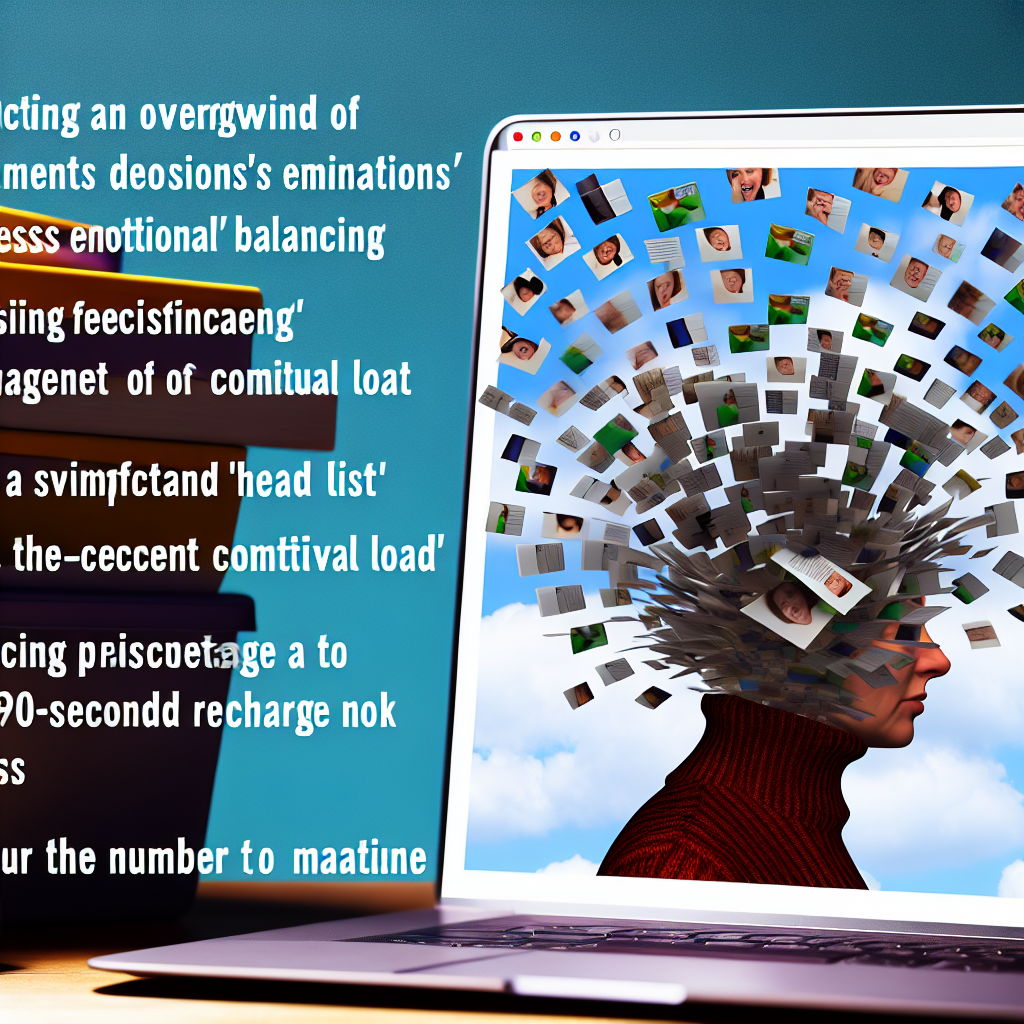
# When Your Brain Feels Like a Browser With Too Many Tabs: A Friendly Reset for Busy Parents
If you’re a millennial parent trying to keep tiny humans alive, hold down a job, and remember to buy toothpaste, you know this sound: mental tabs slamming open. Groceries, deadlines, PTA messages, soccer schedules, “Did I lock the back door?” — it’s a loop. We think the answer is another app or planner. Spoiler: adding more tabs doesn’t close the ones already screaming for attention.
I’m Rachel Foster, and I’ve spent weekends URL-hopping in my head while my kids have multifold requests (Mom, where’s my other shoe? Mom, can I have pancakes? Mom, are we dead?) This piece is for the parent who’s tired, who wants to be better at showing up without turning every quiet minute into a to-do audit.
## The mental-load overload: what’s actually happening
Parenthood isn’t just chores and calendars — it’s a slow accumulation of invisible labor. You’re not only doing the things; you’re remembering the things, worrying about the things, and emotionally prepping for the things other people might ask for. That constant low-level responsibility becomes background noise that leaks into everything.
What that feels like: you sit down to relax and your brain launches an inventory: packed lunches, dentist appointment, gift for Ava, reply to your boss, change the lightbulb, check homework, call Grandma. Rest becomes another checkbox. No wonder you feel exhausted.
## Why the “perfect system” rarely sticks
I’ve bought planners that promise to solve my life and downloaded apps that require a tutorial longer than my lunch break. The common flaw: complexity. The systems that demand daily rituals you forget to do become the newest item on the pile. Motivation is finite — and parenting eats a lot of it.
A planner that needs three weekly rituals? That’s a relationship with a project, not a tool. A super-powered app that takes 20 minutes to set up? You’ll do the setup once and then feel guilty every time you don’t use it. Real life needs something dumb-simple that actually fits into the messy flow.
## A kinder rule: stop trying to manage everyone else
Here’s a radical, freeing idea: other adults’ emotions are not your job to solve. You can be compassionate without carrying other people’s emotional luggage. You can’t read minds, and policing feelings is a fast track to burnout.
Practice: if your partner is stressed about work, ask a question, offer a boundary (I can listen for 10 minutes), then let them carry the rest. If your teen is quiet and irritable, offer space and a check-in later. You’re allowed to be present without being responsible for everyone’s emotional weather.
This boundary frees up real headspace — the resource you’re actually short on.
## Try a head list (not just a to-do list)
The head list is my MVP. It’s not a beautifully organized board — it’s a brain parking lot. Everything you’re carrying goes there: ideas, worries, follow-ups, random shopping items. Use one capture spot: a small notebook, voice memo, or the phone note app you already have.
How I use mine:
– Capture stuff immediately. If it’s in your head, write it down. Don’t categorize. Don’t prioritize — just get it out.
– Every evening, scan the head list and pick up to three priority items for the next day. That tiny cap forces a decision and prevents your mental browser from loading every tab at once.
You’ll be surprised how calming it is to know there’s a place for those thoughts.
## The 90-second reset: a tiny ritual that actually sticks
When everything feels chaotic, a short pause can be more powerful than an hour of planning. I started doing this after realizing my brain needed a mental “clear cache” before switching tasks.
Try this before you respond to a text, jump into work, or start bedtime:
– Put your phone face down (or in another room).
– Close your eyes and take slow, steady breaths for 30–45 seconds.
– Use a grounding cue: name three sounds you hear, or three tiny things you’re grateful for.
– Open your eyes and name the single next action: “Start the email,” “load laundry,” or “read one chapter.”
It takes less time than making a coffee and prevents you from starting tasks already depleted.
## Simplify, don’t perfect: one system to rule them all
Pick one place for tasks and stick with it for a month. That’s it. No migrating everything midweek. Limit your daily list to three must-dos. Delegate what you can to your partner, older kids, or a helpful neighbor. Put the rest on the head list for a weekly sweep.
Weekly review: 15 minutes. Triage the head list, move items into the week, and delete what’s irrelevant. If you’re tempted to rescue everything, remember: some things will be fine if they’re not on your radar.
## Practical examples that actually work at home
– Morning 90-second reset: before checking messages, pause, breathe, pick your top three.
– One-question family check-in: once a week ask, “What’s one small thing you need this week?” It’s faster than decoding moods and actually surfaces requests.
– Micro-delegation: two kid tasks a day — set plates, feed the pet, tidy toys. It helps you and it teaches responsibility.
– Minimal app rule: if an app isn’t used consistently for 30 days, archive it. Keep what helps.
## Wins, fails, and the real middle ground
Win: I started a nightly head-list ritual and realized I hadn’t forgotten the soccer cleats — I had just stopped carrying them mentally. The relief was immediate.
Fail: I once tried a “Monday morning family meeting” that lasted 90 minutes and involved color-coded charts. It died within two weeks. Lesson learned: keep things tiny and human.
Middle ground: some weeks the 90-second reset is a shower where I actually think about nothing. Some weeks it’s five seconds. Both are fine. Progress doesn’t require perfection.
## Takeaway
You don’t need another elaborate system — you need space, boundaries, and tiny rituals that protect your focus and sanity. Stop trying to control other people’s feelings, declutter your head with a simple capture habit, limit your daily must-dos, and try the 90-second reset. Over weeks, these tiny shifts add up to being more present where it counts.
What’s one small routine you’d like to try this week? Share it here — tell us the win you hope for, or the hilarious way you think it might fail. We’ll trade successes, commiserate on the flops, and maybe close a few tabs together.
— Rachel Foster