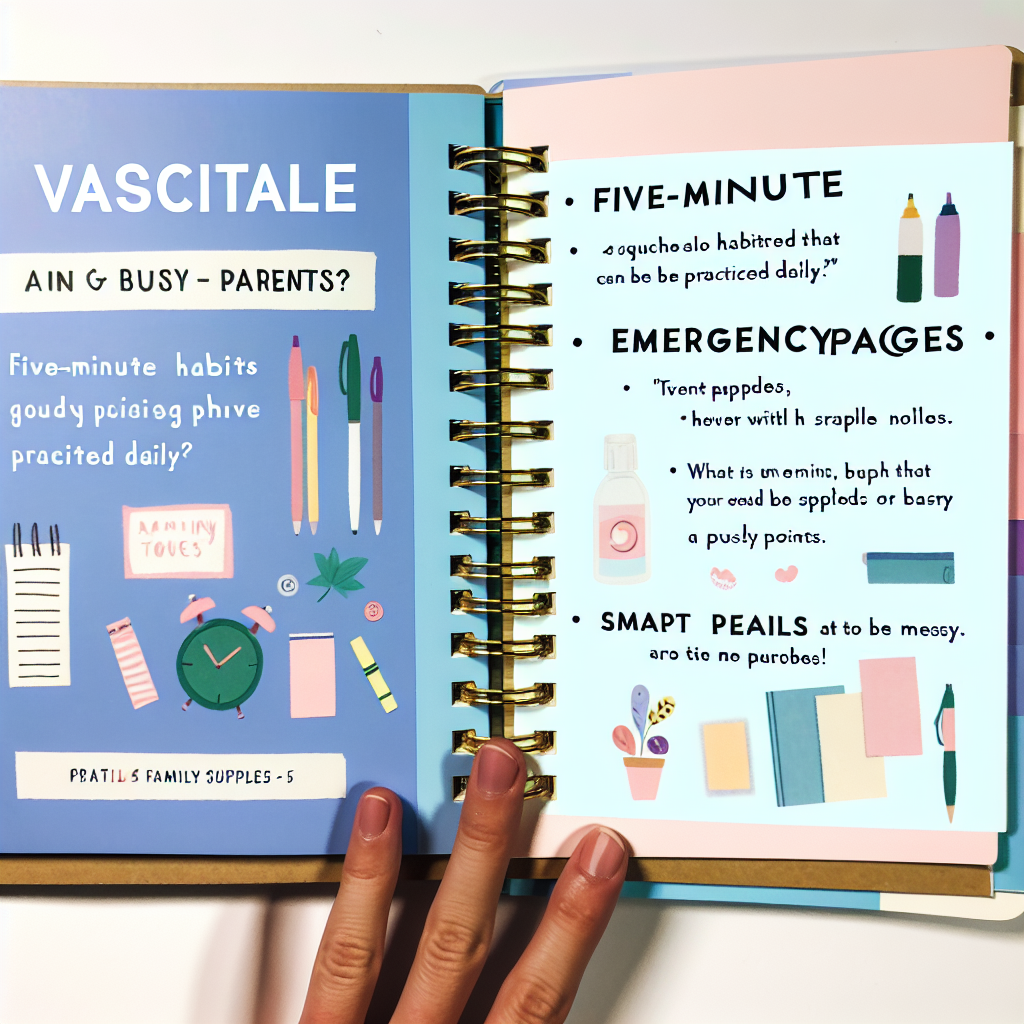
# The Busy Parent’s Guide to Journaling: Fast, Meaningful, and Family-Ready
by Rachel Foster
We all agree there are a hundred things we “should” do as parents—meal prep, educational play, save for college, and apparently become miniature scrapbooking gods. Somewhere between diaper explosions and endless laundry, journaling tends to slip into the fantasy column. Then one morning you realize you can’t remember when your toddler last had chicken pox, or you can’t find the dentist appointment you swore you’d written down.
Journaling doesn’t have to be another guilty hobby. It can be a five-minute pause that buys you sanity, memory-keeping, and occasionally, a rescue plan when the babysitter calls with questions. Here’s how to make a journal that’s fast, meaningful, and actually used.
## Why journaling matters—yes, even when you’re drowning
A journal is not a craft exhibit; it’s a tool. For parents, it’s a place to:
– Offload the worry that otherwise bubbles into stress.
– Track tiny milestones (first swear word you regret, first lost tooth victory dance).
– Keep appointments, meds, and emergency info in one place.
– Capture the small wins that would otherwise vanish into the blur—“we all ate dinner,” “kid slept through the night,” or “I showered before noon.”
Five minutes while a baby naps or a school-run is enough to jot a highlight and set one tiny goal. That small habit nudges you from reactive to intentional. That’s the whole point.
## Quick-start spreads for tiny chunks of time
If you’re new or stretched thin, try spreads that take minutes, not hours. Use whatever notebook is handy—a spiral, a cheap composition book, or a pretty bullet-journal—function over form.
– Daily brain dump (1 column: Today, 1 column: Tomorrow, 1 column: Wins). Quick, satisfying, and finishes with something positive.
– Meal + prep block (3 rows: Dinner, Lunches, Weekend Prep). Saves dinner meltdowns.
– Kid tracker (1 box per child per day: naps, meds, mood). Great for babysitters.
– Habit mini-grid (6 squares: sleep, water, movement, screen-free time, family read, self-care). Check a box and feel accomplished.
Pro tip: Keep the same layout for a few weeks so it becomes habit. I used to redesign every Sunday—then I lost my Sunday. Stick to simple.
## How much time should you actually spend?
The internet makes journaling look like an art degree. For parents, be kind to your schedule.
– 5 minutes daily: capture a highlight and one tiny goal.
– 30 minutes weekly: set up the week, add appointments, sync with your partner.
– 1 hour monthly: plan the month, note big events, and do whatever creative play feels like self-care.
Confession: I tried to art-journal every weekend for a month. It was therapeutic until the baby decided weekends were daytime naps only while attached to my chest. I traded the elaborate spreads for a plain notebook and haven’t regretted it.
## Build an “In Case of Emergency” page (seriously, do it)
This is one of the most useful pages you’ll ever make. When someone’s asking about allergies at 3 a.m., you want the info accessible.
What to include:
– Emergency contacts and childcare backups.
– Medical basics: allergies, chronic conditions, meds + dosages.
– Where to find legal docs and insurance details.
– Work contacts and who to call for time-sensitive issues.
– Quick notes: where you keep house keys, where to find the charger, or “blue bag by front door = grab kid snacks.”
Security tips:
– Keep the journal in a known spot and share that spot with one trusted person.
– Don’t list every password. Use hints or note where your password manager is and who has access.
– If privacy is a worry, keep a short checklist instead of full details.
I once pulled out our emergency page when the sitter asked about my son’s epi-pen—saved us both a panicked Google search and maybe a minute of calm was worth a lot.
## Shop smarter: supplies without the clutter
Stationery can become its own hobby (and budget line item). If buying feels creative, limit it so you don’t end up with shelves of half-used washi.
– Basic kit: one good notebook, two pens you love, sticky tabs, and one roll of washi.
– If you paint: a small travel palette suffices—no need for a studio.
– Monthly haul rule: one new item a month keeps novelty without clutter.
Keep photos of spreads you actually use. It stops impulse buys faster than willpower.
## Make journaling social—on your terms
Community can inspire without stealing your time. Join a monthly group, a private FB circle, or an accountability buddy. If you post, use private groups or a photo host so the kids’ faces stay controlled.
If you want to make content, keep it tiny: a 5–10 minute time-lapse or a short snapshot works better than an edited saga. No one needs a 30-minute tour of your highlighter collection.
## Art as therapy, not pressure
If decorating pages calms you, do it. If your page is a scribble that says, “We survived,” that’s valid too. Journaling is a tool for reflection and release, not something to measure your worth by.
One of my favorite spreads is simply a page where I write the funniest thing each kid said that week. No stickers, no layout—just handwriting. It’s messy and perfect.
## Wins, fails, and the messy middle
Wins: A single-page weekly layout stopped me from double-booking soccer practice and I can now find the allergy info without riffling through phones. Tiny wins matter.
Fails: I once spent an hour on an “aesthetic” spread the night before a trip, then forgot the journal on the kitchen counter. We found it later; the stoic coffee stain became a memory.
The point is that both wins and fails belong. Celebrate the small systems that stick, and laugh at the ones that don’t.
## Takeaway
Journaling for parents should be flexible, manageable, and useful. Start with five minutes a day or thirty minutes a week, build an emergency page, limit shopping, and give yourself permission to be plain. Your notebook can be a map of your life, a tiny calm in a noisy day, and an actual help when things go sideways.
What one tiny journaling habit has saved you time, sanity, or memory in your household? Share the wins and the hilarious fails—let’s trade ideas and rescue plans.