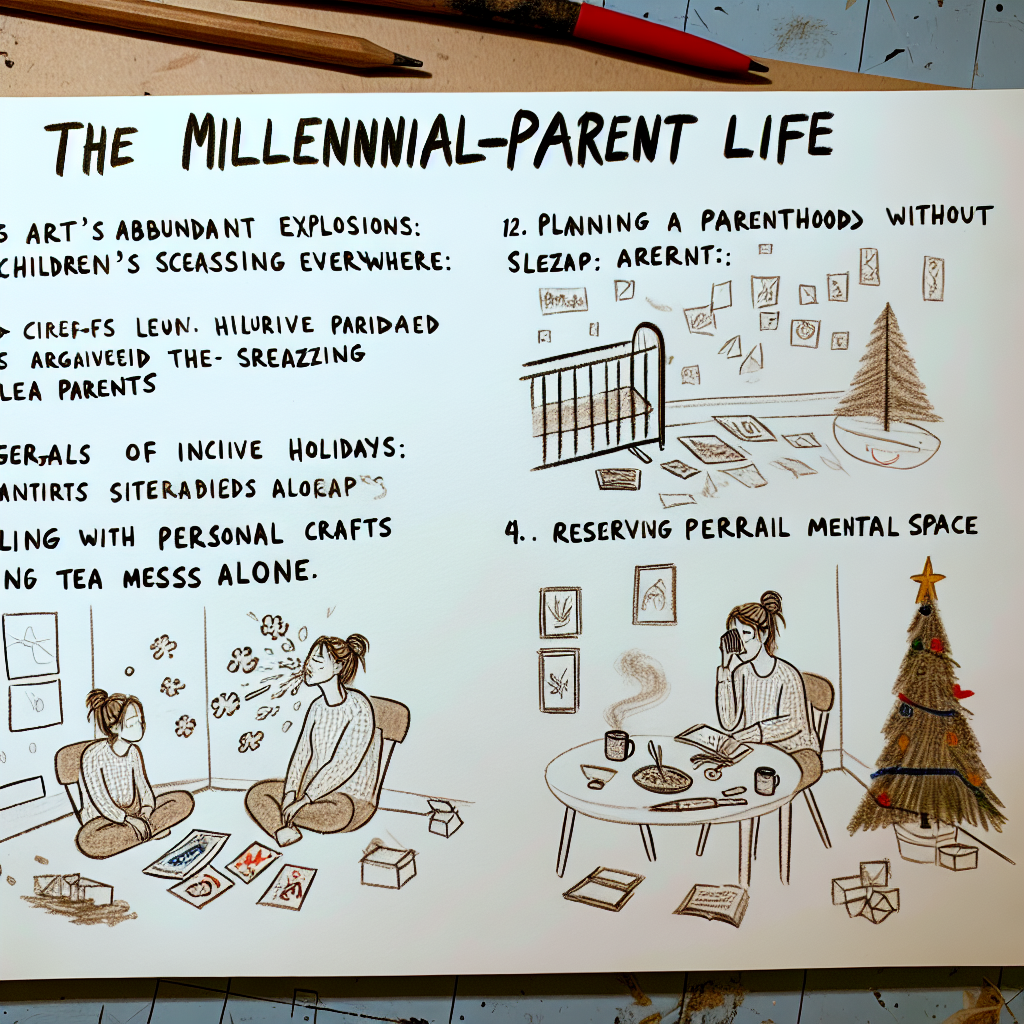
# When the Fridge Is a Gallery and the Holidays Are a Minefield: Creative, Calm Ways to Keep the Memories—and Your Sanity
If you’re a millennial parent, your kitchen looks like an art collective run by tiny, sticky-handed curators. There are handprints in strategic places, glitter that will outlive us all, and the kind of postcard scribbles that make you weep and wonder how to store 17 versions of the same purple dinosaur.
Add a baby who wakes at 3 a.m., a child with a peanut allergy, and no nearby help, and the whole thing starts to feel impossible. I’ve been there—adoring the art and secretly fantasizing about a minimalist life with one less macaroni mosaic per square foot. The trick isn’t to ditch the creativity; it’s to build small systems that honor the stuff that matters and keep the rest from swallowing your home (and your patience).
## The art avalanche: keep the memories, not the clutter
We have to accept one truth: kids make a lot. And yes, it’s all precious. But you don’t have to keep everything to prove you care.
– Pick a “gallery” spot. Mine is one slim strip of wall by the kitchen. Clipboards, a wire with clips, or a magnet strip work. Display a rotation—weekly or biweekly—so the showcase feels special, not like a burial ground.
– Photograph everything. Snap a quick photo before recycling. Tag by age/date on your phone and make a year-end photo book. I learned to stop agonizing over whether to save Junior’s 97th finger painting when I could archive it in 30 seconds.
– Save intentionally. Keep one slim portfolio or a file box for each kid. Firsts, milestone pieces, or things with a story only go in. Limit: one box per child per year. If you can’t close the box, you’re keeping too much.
– Repurpose. Turn drawings into wrapping paper, greeting cards, bookmarks, or laminated placemats. We made a pile of holiday cards from scribbly landscapes last year—grandparents loved them.
– Share the love. Mail pieces to long-distance relatives, or scan and email them. It spreads joy and clears space faster than you can say glitter.
I’ll confess a failure: I used to keep everything in a closet “for later.” Later came when we moved and a box labeled “Masterpieces” melted into a chaotic papier-mache artifact. That was the last time I let sentimentality beat strategy.
## Make holidays inclusive: allergy-friendly ideas that still feel fun
If food is a landmine for your kid, holidays can feel like a parade of fear. You can do better than a sad candy-free bag.
– Host a swap or party. A small at-home Halloween with allergy-safe candy makes your child feel celebrated and safe.
– Non-food treats. Stickers, temporary tattoos, glow sticks, pencils, and small toys are festive and inclusive. I keep a stash in the closet every October.
– The “switch box” method. Let kids collect regular candy, then swap at a table for safe alternatives. It preserves the ritual and the haul.
– Label and check. Read ingredient lists. “Natural flavors” can hide allergens—call the manufacturer if you’re unsure.
– Advocate with neighbors. A teal-pumpkin note on your porch or a message in the neighborhood group often brings more non-food options than you’d expect.
One win: we did a block swap one year and my allergic kid came home with more tiny toys than candy—and zero tears.
## Crafting as connection: low-mess projects that actually fit your life
You don’t need an elaborate Pinterest setup to make meaning. The point is connection, not perfection.
– One-minute setups. Stickers on paper, washi-tape collages, or big-brush watercolors. Low mess, high payoff.
– Sensory bins and nature crafts. A box of leaves, sticks, and safe kitchen items becomes a full afternoon of exploration. After a walk, glue the best bits onto cardstock for a nature collage.
– Replicable weekly projects. Try a “Friday craft” like handprint calendars or seasonal garlands. Kids learn the rhythm and you get predictability.
– Involve kids in cleanup. Wiping a table or tossing scraps teaches responsibility and makes you less of a solo janitor.
My proudest fail-turned-win: I once attempted a glitter crown project at 9 p.m. Spoiler—do not glitter at 9 p.m. Instead, we switched to glitter-free sticker crowns the next day and had way more fun.
## Protect your sanity: real ways to get help and breathe
This is not just organizational advice—parenting without backup is emotionally draining. Tiny resets add up.
– Micro-breaks matter. Five minutes with a hot drink, a walk to the mailbox, or a podcast episode can reset you.
– Ask for help. Say plainly, “Can you do bedtime tonight?” People want to help but don’t always know what to do.
– Seek community. Online allergy groups, parenting threads, or a local craft circle can give practical tips and moral support. I found my go-to Halloween swap from a neighborhood Facebook post.
– Low-cost supports. Teletherapy, sliding-scale clinics, and parent groups exist. For physical aches, check community health centers for home exercise plans.
– Lower the bar. Not every day needs to be a highlight reel. Surviving the week? That’s a win.
I remember once asking a friend for 90 minutes while I napped in the car. It felt desperate and glorious. Ask away. People will be glad to offer relief.
## Finding joy (yes, it’s possible)
Joy doesn’t have to be dramatic to be real. It’s in repeatable, small moments.
– Create tiny rituals: a bedtime song, a Saturday gallery opening where your kid explains their art, a weekly craft.
– Notice and name the good. Say out loud, “That made me so happy,” when it happens. It trains your brain to spot joy.
– Reframe productivity. Parenting work—feeding, soothing, keeping little people alive—is meaningful even if it doesn’t look like output on a to-do list.
Takeaway: you can honor your child’s creativity without letting it swallow your home or your wellbeing. Rotate displays, digitize artwork, plan allergy-safe celebrations, choose low-mess crafts, and ask for help when you need it. Small systems and tiny rituals save sanity and keep the memories that truly matter.
I want to hear from you: what’s one tiny ritual or hack that saved your sanity (or a story of a glitter disaster you still laugh about)? Share it—let’s build a better, messier, kinder parenting manual together.