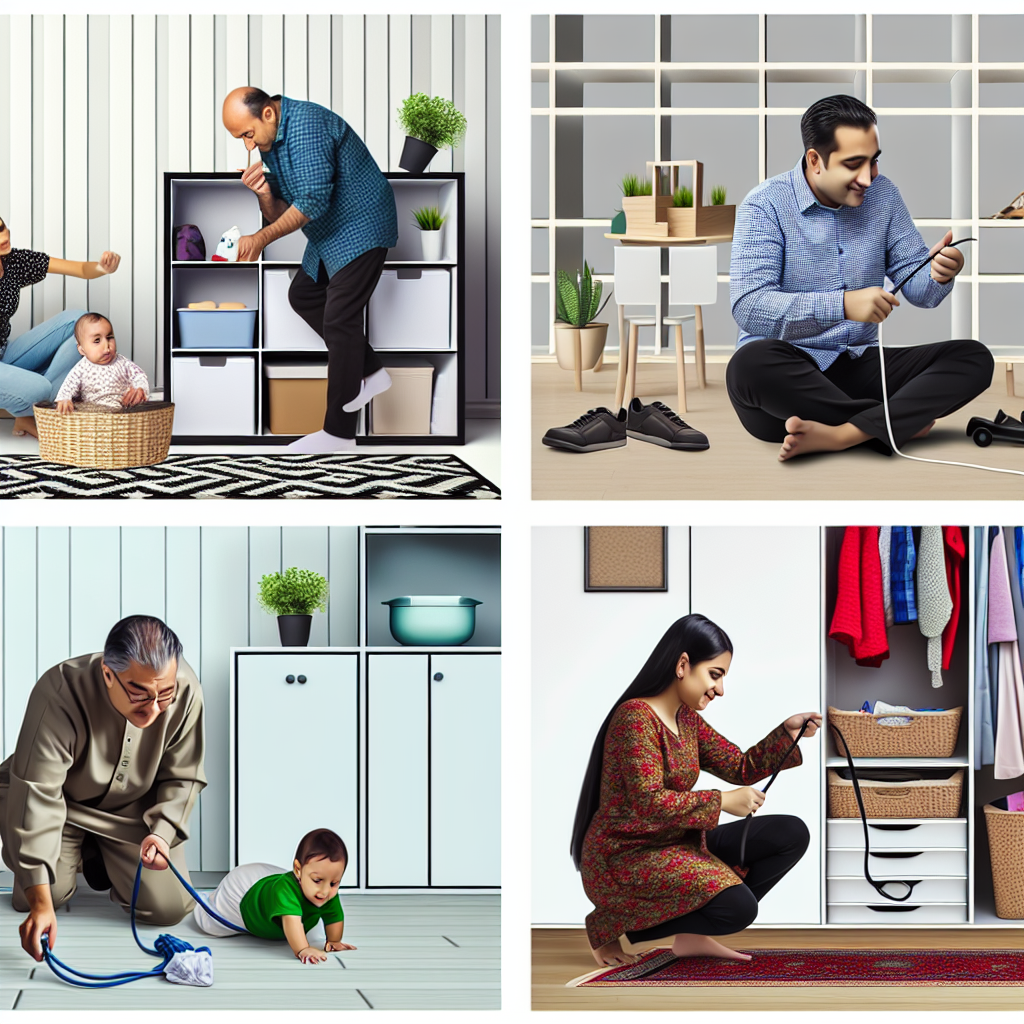
# Tiny Things, Big Wins: Real-Life Hacks to Organize Cubes, Cords, Cabinets and Closet Chaos
If your life currently involves stepping on rogue LEGO while searching for a missing charger, welcome to the club. Parenthood shrinks your living space and expands the number of small things that need homes: cables, hair tools, season-specific shoes, and those cube shelves that look like a great idea online until you actually try to find a single sock in them.
I am Rachel Foster, unreliable labeler, proud cable hoarder, and a parent who has learned the hard way that small wins keep the ship afloat. Below are the real-life solutions I now lean on when chaos gets loud. Take what works, laugh at what doesn’t, and remember that imperfect systems that get used are better than perfect systems that stay theoretical.
## Tame those tall cube shelves
The problem: you bought a tall cube unit because it matched your aesthetic, then discovered it was a vertical abyss where tiny things disappear forever.
What actually worked for me:
– Stackable shelf inserts
– I got cheap acrylic inserts and suddenly the world had fewer lost socks. They sit inside the cube and halve the wasted height, which makes everything look tidier and stay visible for little hands.
– DIY half-shelf
– On my second attempt I cut a thin piece of MDF and rested it on removable adhesive shelf pins. It was rental-friendly and felt like a small domestic victory. Pro tip: measure twice, curse once.
– Bins, baskets, and containment
– Shallow baskets are the unsung heroes. If your toddler can’t reach into a cavern, they won’t make a mess. Label the front with a permanent marker and you suddenly have a toy taxonomy: cars, dinosaurs, and That One Sock.
– Vertical dividers
– For board books and baking trays, a vertical divider keeps things upright. It’s the difference between a calm shelf and a face-down avalanche.
Safety note: anchor tall cube units to the wall. I learned this after a brief heart-stopping moment with a climber and a wobbly shelf. Prevention is parenting gold.
## The cable confessional: how I sorted 10 shoe boxes of cords
Cables breed. I know this because I once inherited what I called the cable mausoleum: 10 shoeboxes full of mystery spaghetti.
Here’s my no-shame system.
– Sort by function and size
– Power bricks together, USBs together, HDMI with HDMI. If it has a very specific plug, label the bag with the device name.
– Label both ends
– I use small pieces of masking tape and a Sharpie. Label near the connector and near the plug. When I unplug the router at 2 am, I do not want to play guessing games.
– Contain and compress
– Tackle boxes and bead organizers are brilliant for short cords. Velcro straps tame long cords. Coil them neatly and store vertically in a tall container, or hang them on large hooks.
– Photo inventory
– For outrageously obscure connectors, snap a photo and tape it to the bag. If you find yourself with three identical chargers, donate the extras. Your future self will thank you.
Confession: I still have one cable in a labeled bag called maybe-camera-2011. It stays for sentimental reasons and because nostalgia is a valid organizing criterion.
## Inside-cabinet beauty station, minus the drama
I wanted hair tools handy without turning my vanity door into Swiss cheese. My first attempt involved screws, regret, and a plumber. Lessons learned:
– Magnetic rail and heavy-duty magnets
– Attach a metal strip to the inside door and use strong magnets for metal tools. It keeps things flat and accessible.
– Slim over-the-cabinet racks
– Measure the door thickness first. Some models slide in without needing screws and they look tidier than a basket of tangled hot tools.
– Velcro or adhesive loops
– For curling irons, adhesive Velcro straps hold the handles. Use the weight ratings and don’t overestimate adhesive bravery.
– Tension rod hammock
– A short tension rod across the cabinet acts like a mini-hammock for baskets. No screws, no stress.
– Reinforcement trick
– If you need a single screw point, glue a narrow painted wood strip to the inside edge and attach your hook there. It hides the reinforcement and avoids door damage.
I still have a hair dryer ritual where I unplug it like a tiny ceremony, but at least it now has a place.
## Labeling that actually fits small tags
Tiny labels are the worst. I tried to squeeze words into 13x37mm and learned to be clever.
– Check label maker tape widths
– Some devices allow continuous thermal rolls so you can make narrower labels.
– Print and cut
– Matte sticker paper and a craft cutter are my secret weapons. It’s a little extra effort but the tiny labels look grown-up.
– Pre-cut mini labels
– Craft stores carry kiss-cut sheets in small sizes. Life-changing if you hate trimming tiny rectangles.
– Go digital
– For cables and boxes, take a photo and attach it to the bag. It’s searchable and avoids label-legibility drama.
## Seasonal clothes: boots and shorts coexist
If you have one child, you have both sandals and snow boots somewhere in the house. Here’s how to keep them from staging a coup.
– Boot storage
– Tall bins with cardboard or pool noodles keep boots upright. Boot shapers are great if you wear them a lot; otherwise shoeboxes labeled by season work.
– Rotate and compress
– Drawer organizers for shorts, vacuum-seal bags for off-season clothes if space is tight. Labeling the bins with names and seasons saves morning panic.
## Final takeaway
Organizing is not a one-weekend makeover. It is a set of tiny, repeatable wins that add up. Pick one zone, spend an hour, and call it progress. Embrace containment, clear labeling, and a spot for everything. Your home will not be Pinterest-perfect, but you will rescue more socks and charge more devices without a duel.
Your turn: what tiny organizing trick transformed your mornings or stopped you from playing cable roulette? Share your wins and fails so we can all steal your brilliance.