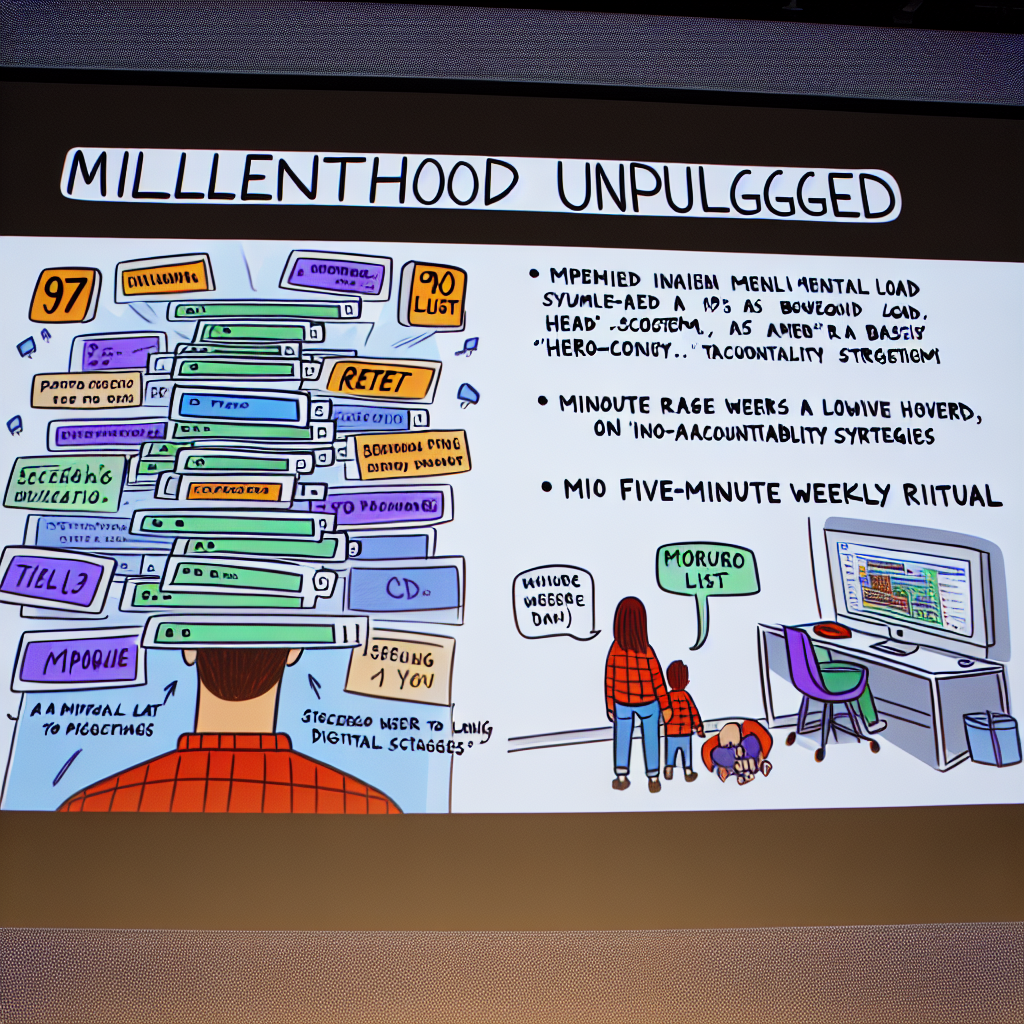
# Your Brain Is Not a Browser: Simple Ways Millennial Parents Can Stop Overloading and Start Doing Less — Better
If you’re a parent juggling work, kids, chores and a buzzing phone, you already know the feeling: dozens of half-formed reminders, errands, and “should-dos” pinging at you like tabs in a browser you can’t close. That noise doesn’t just steal productivity — it steals joy.
I once went to bed convinced I’d fed the cat, only to discover the cat giving me the side-eye at breakfast and the dog smuggling the missing croissant. My brain had three grocery lists, two school permission slips, and an appointment I’d scheduled twice — in different apps — all simmering under the surface. It felt like I was trying to work with 97 tabs open and a toddler using the mouse.
The good news? You don’t need another feature-packed app or a perfect morning routine. You need a simpler way to capture the clutter, calm the sudden freeze, and actually get things done. Here’s what worked (and what spectacularly didn’t) for me — in real, slightly messy parental fashion.
## Why it feels like 97 tabs are open
Parenting is a full-time emotional and logistical spreadsheet that no one asked to maintain. There are decisions about snacks, naps, work deadlines, and whether or not you remembered to send permission slips. When everything is “urgent,” your brain stalls: you spend more time organizing the chaos than doing the things that actually matter.
And then there’s shiny-tool syndrome. New app? Sign me up. Then I spend Sunday afternoon color-coding instead of folding laundry. The system becomes the project. The things? Not done.
## Why most to-do systems fail parents
Feature-rich equals friction. When your task list balloons to 100 items, prioritizing becomes an Olympic sport. You get tiny dopamine hits checking boxes, but the big rocks — the things that would actually make life smoother — stay ignored. Motivation is a toddler: unpredictable, loud, and liable to nap-ruin your plans.
Weekly reviews become mythical creatures. Someone on the internet has them; you have pizza stains and a half-read parenting newsletter.
## Make a “head list,” not just a to-do list
Treat thoughts and worries like first-class citizens. I call it a head list with three simple buckets:
– Now: must-happen in 24–48 hours. (Pick-ups, lunches, bills due.)
– Soon: schedule this week. (Doctor visit, parent-teacher chat.)
– Hold: ideas and future stuff. (Birthday themes, home projects.)
Write everything down in one place — the back of a kid’s drawing, a single notes file, a tiny notebook by the coffee maker. The goal is to get the replay out of your head. Bonus: when you use one place, you stop inventing new places to lose things.
Real fail I’ll admit: I once had three grocery lists and bought 18 avocados because I forgot which list was current. The head list would’ve prevented that week of guacamole regret.
## Try the 90-second reset before you switch tasks
This is my favorite tiny habit and it’s almost embarrassingly simple. Before you jump into a new task (or back to work after the fourth interruption), give yourself 90 seconds: no screens, no scrolling. Close your eyes, breathe, or hum one line of a calming song. Not to zen-out for an hour — just to let your nervous system stop sprinting.
It’s like blowing on a photo lens before taking the shot. Things get clearer. You’re less likely to reply to an email with toddler energy and more likely to actually write a useful sentence.
I’ve used this after everything from tantrums to 3 a.m. wakeups. It doesn’t make the chaos disappear, but it keeps me from carrying the chaos into everything I do.
## Make accountability tiny and public
Big goals are intimidating; tiny, public ones stick. Pick a bite-sized unit — 10 minutes of reading, 20 minutes of tidying, one focused work block — then tell one person: your partner, a friend, or a parenting group.
I post a short “I’ll do 15 minutes now” message in a group chat and check back. Sometimes it’s just a thumbs-up. Sometimes someone else is doing the same thing and suddenly we’re both productive. No trophies, just a gentle nudge.
## Keep the tools simple and forgiving
If an app becomes another task, ditch it. Use one place for tasks and one for ideas. Limit projects to three priorities per week. Use easy labels: “non-negotiable,” “delegate,” and “drop.”
Here’s how that looks in practice:
– Monday morning: write head list.
– Pick three priorities for the week (one home, one kid-related, one work).
– Block time for non-negotiables (meals, school run). Delegate one small thing.
Systems should help you live your life, not become the life you’re living.
## Be human online — and with yourself
We see curated feeds of perfect breakfasts and color-coded closets. I’ll never have my linen closet staged for Instagram. And that’s okay. Share the wins and the fails. Tell people the toddler scribbled on the birthday card and you covered it with glitter. Vulnerable check-ins invite practical tips and solidarity.
You’re not failing because you can’t do a 90-minute deep work block every day. You’re parenting and that changes the rules.
## A weekly five-minute ritual that helps
Pick a low-energy pocket — Sunday evening, Friday afternoon — and spend five minutes:
1. Dump your head into the head list.
2. Pick three priorities for the coming days.
3. Schedule non-negotiables.
4. Set one tiny accountability promise.
Five minutes. That’s it. It replaces elaborate weekly reviews with something doable and consistent.
## Wins, fails, and the messy middle
Win: I stopped panicking about school forms because I put them all in the “Now” bucket and set one reminder. Fail: I once proudly announced on a group thread that I’d decluttered my closet — only to remember I’d shoved everything into a laundry basket. Win: I actually read for ten minutes every night for a month. Fail: Some weeks my head list is a sticky note that says, “Survive.” Both are fine. That’s parenting.
Takeaway: You don’t need another app or an all-or-nothing routine. You need simpler habits: empty your head into a single place, pause before switching tasks, pick a few real priorities, and use micro-accountability to move the needle. Small, consistent practices — not perfect systems — help you do less and feel more present.
I’ll leave you with the two things I start with on rough days: a 90-second reset and one honest list. Try them for a week. If nothing else, you might save yourself from buying 18 avocados.
What tiny habit helped you reclaim a bit of sanity this week? Share the weird wins and the glorious fails — I want to hear them.