# My Brain Has 97 Tabs Open: How to Quiet the Mental Noise and Actually Get Stuff Done (With Kids)
If you’re a parent juggling work calls, bedtime routines, snack negotiations, and the long list of mini-emergencies that come with small humans, you already know what “too many tabs” feels like. It’s not just busy — it’s a background hum of half-remembered tasks, what-ifs, and low-level panic. The good news: you don’t have to magically become more organized overnight. You can build tiny habits and boundaries that calm the storm, help you prioritize, and keep your sanity intact.
A year ago I found myself in the cereal aisle, sobbing because I couldn’t remember whether I’d scheduled the dentist and also because my toddler had somehow smeared peanut butter on my phone. That — not the meetings, not the laundry pile — was my turning point. It wasn’t that I had too much to do; it was that everything was living in my head, and my head was full.
Why the mental load is different from being busy
Being busy is measurable — meetings, grocery runs, deadlines. The mental load is invisible and ongoing: remembering immunization appointments, deciding what’s for dinner, carrying everyone’s emotional labor. It’s the part of parenting that lives in your head and never clocks out.
That constant noise makes it harder to actualize anything. You freeze, over-organize, or bounce between five to-do apps like they’ll save you. Spoiler: tools don’t fix tired brains. They only help if your brain’s got a place to put the noise.
Stop trying to read other people’s minds
One tiny relief my therapist handed me like a lifesaver was permission to stop managing other people’s feelings — including how they perceive me. A huge part of the mental load is anticipating reactions and prepping responses for conversations that haven’t happened.
Here’s the truth: you can’t preempt every awkward look, every unsolicited remark about screen time, or every judgmental PTA hot take. If someone needs to say something to you, they will. If they don’t, it’s not your job to emotionally contort yourself to prevent their future displeasure.
Calm your own storm first
There’s a difference between unloading everything on a partner (which can spiral) and learning tiny tools to steady yourself. These micro-practices aren’t therapy in a session — they’re ways to interrupt the loop so your executive function can do its job.
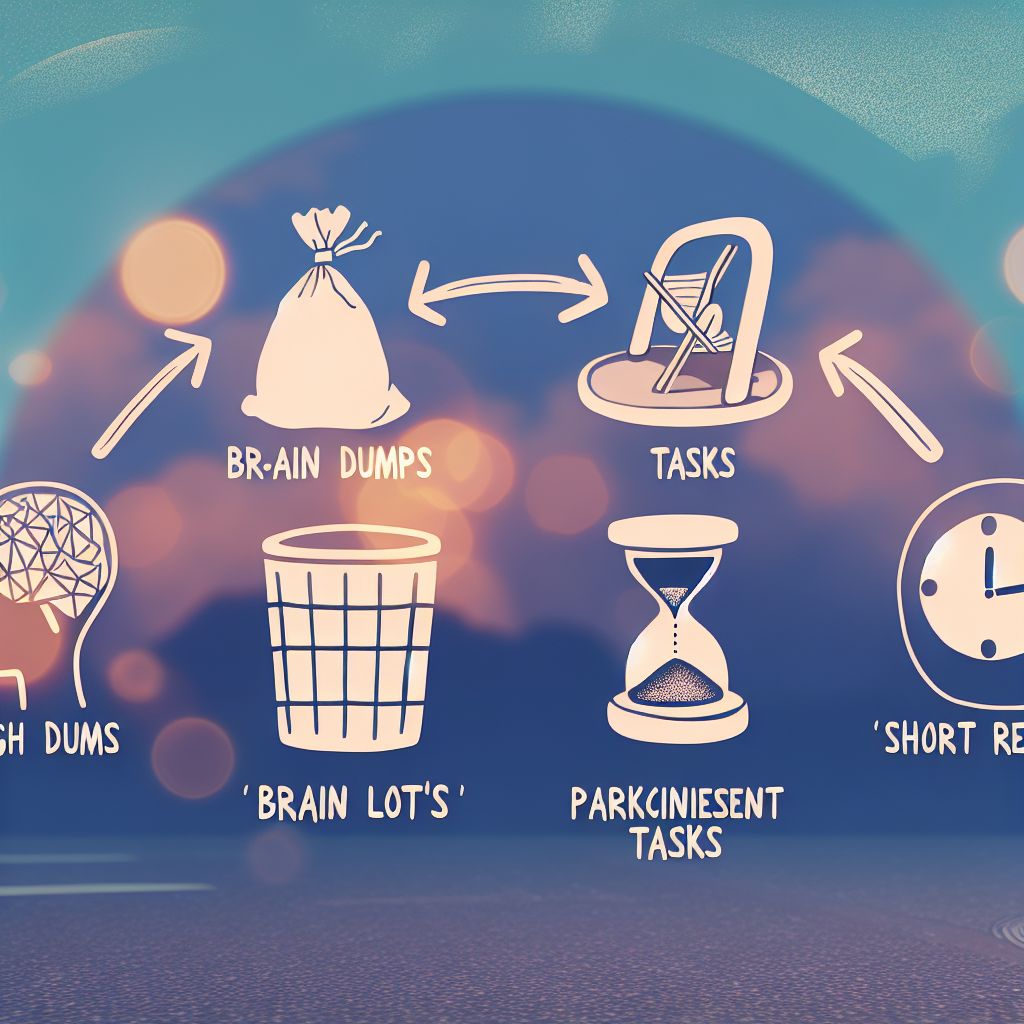
– Brain dump: 5–10 minutes morning or night. Get EVERYTHING out of your head and onto paper.
– Mini resets: 3–5 minutes of deep breathing, a stroller walk, or a one-song dance break with the kids. (Yes, that’s valid self-care.)
– Journaling prompt: “What matters most tomorrow?”—because vague worry is the enemy.
– Movement: Even five squats or a soft stretch shifts your physiology enough to stop rumination.
These aren’t fixes. They’re interruptions that let you start.
Build a “head list,” not a hundred tabs
Your to-do list and your brain are not the same. Here’s a system that treats the mental load like a manageable thing:
– Do one brain dump into a single place: physical notebook or one notes app — pick what you’ll actually use.
– Pick three Most Important Tasks (MITs) each day: one for home/family, one for work, one for you. If you get those done, the day is a win.
– Create a “parking lot” for ideas and worries you’re not acting on now. Revisit weekly.
– Two-minute rule: if it takes under two minutes, do it now.
– Weekly tidy: 10–15 minutes to sort the parking lot: schedule, delegate, or delete.
This system stops your brain from being the storage unit for everything.
Make tools serve you, not the other way around
We’ve all chased the perfect productivity app. The trick isn’t the app — it’s choosing one simple system and sticking to it.
– One app or one notebook. That’s it.
– Skip labels unless they truly help. Categories can create friction.
– Automate recurring things: bill reminders, grocery lists, subscription renewals.
– Keep weekly reviews short — 15 minutes. Look for what’s actionable, then close the app.
If a tool stops working, don’t shame yourself. Try a different format: a physical planner for routines, a shared family calendar for logistics, or a whiteboard in the kitchen for visual priorities.
Small routines that actually stick
Consistency beats intensity. Tiny habits are your friend:
– Morning: 5-minute brain dump + pick your three MITs.
– Midday: Quick check-in — did you finish at least one MIT? If not, reset expectations.
– Evening: 10-minute family sync — calendar check, one plan for tomorrow, one moment of connection.
Treat them like brushing your teeth. They take less time than convincing a preschooler to wear shoes, and they save much more mental energy.
Wins & fails (because honesty is everything)
Win: I once cleared an entire afternoon because I declared it “no logistics zone” and actually read a book. It felt revolutionary.
Fail: I tried color-coding my kid’s lunchbox items and then cried when the stickers fell off. Some organization systems are a temperament match; others are sad and adhesive.
Win: Brain dumping before bed cut nighttime anxiety in half. I stopped waking up rehearsing conversations I’d never have.
Fail: I kept switching task apps for months because I convinced myself the perfect one was out there. All I needed was a consistent habit.
A note on comparison and authenticity
If you find yourself doom-scrolling through curated parenting feeds, remember: those are highlights, not the whole messy life. Seek out honest communities where people post wins and meltdowns. That’s where real strategies — and solidarity — live.
Takeaway
You don’t have to quit trying to do everything perfectly. Start by emptying your head into a single place, choose three meaningful priorities each day, and build tiny reset practices that stop the mental noise. Tools help only when they support a simple system you actually use. The aim isn’t perfection — it’s a quieter mind that lets you be present for the people who matter (including yourself). Small changes, done consistently, keep the storm from becoming a hurricane.
Your turn: what tiny habit helped you quiet the tabs in your head — or what glorious fail made you rethink your whole system? Share one win or one hilarious disaster so we can commiserate and learn together.