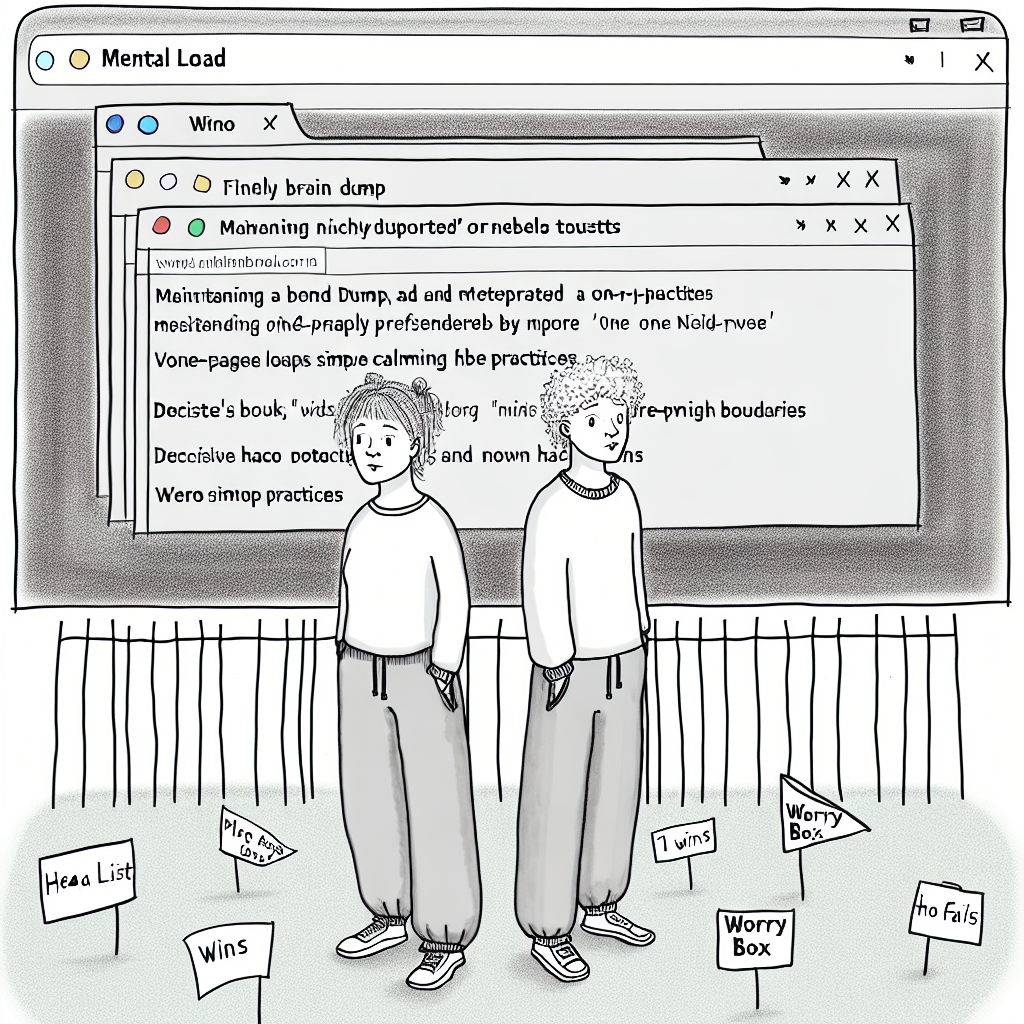
# If your brain had tabs, it would be at 97% (and still loading)
If you’ve ever nodded through a conference call while trying to remember whose snack is allergic to peanuts and which permission slip you promised to sign last week, hi — I see you. That humming, half‑finished thought orchestra? That’s the mental load: an invisible to‑do list that lives in your head and steals calm like it’s on autopay.
I’m Rachel, parent of two small humans and one very passive‑aggressive houseplant. I’ve tried shiny productivity apps (hello, color coding), habit trackers that promised to change my life, and the occasional desperate sticky‑note quilt on the fridge. Two weeks in, the app becomes a relic and the sticky notes fall behind the cereal boxes. What actually helped? Tiny, forgiving habits that work around real life — not ideals. Here’s the messy, practical truth.
## The mental load is a two‑part beast
There are two kinds of clutter living in that 97‑tab brain:
– Tasks: things you can do (email teacher, buy toothpaste).
– Thoughts: worry, replaying a conversation, hypothetical disasters.
Treating them the same just makes more noise. The aim is to offload, sort, and set gentle boundaries so your mind can breathe between toddler negotiations.
## Stop mind‑reading — you’re not the household emotional manager
Much of our weight comes from trying to predict, control, or fix everyone else’s feelings. I used to think it was my job to keep the emotional thermostat at comfortable levels. Spoiler: it’s not. If your partner’s upset, ask rather than assume. If a friend doesn’t reply, don’t invent a crisis.
Practice this line: “Do you need me to listen or do you want help fixing this?” It’s small, direct, and paradoxically liberating. Letting others carry their feelings doesn’t make you cold — it makes you sane.
## From 97 tabs to one “head list” (the one‑page miracle)
Apps fail when they demand constant attention. Complexity replaces clarity. Here’s my simple, one‑page system that survived toddler sticker attacks and a spilled cup of coffee.
1. Capture: Spend five minutes every evening dumping everything from your head onto one note or a single sheet of paper. No order, no judgment. Grocery, worry, school event, weird dream — all there.
2. Clarify: Circle only the items that actually need action from you. Cross out the rest (or move them to the worry box — more on that.)
3. Prioritize: Pick three priorities for tomorrow — one must, one should, one nice‑to‑have. That’s it. Realistic beats aspirational.
4. Park your worries: Give recurring anxious thoughts a parking spot — a “worry box” on the same page. You can’t act on some of these now; that’s okay. Schedule a 10‑minute weekly check‑in to open the box and see if anything moved to the action column.
The act of writing makes chaos feel less urgent. I promise: your brain will stop trying to be a human search bar.
## Rules that actually work (because tiny beats perfect)
– One capture tool only. Pick paper or an app and stick to it. Multiple inboxes = multiple ignored things.
– Two‑minute rule: If it takes less than two minutes, do it now. Signing the permission slip, texting back a quick yes — done.
– Weekly five‑to‑10 minute review: Non‑negotiable, but keep it short. Sunday coffee + head list = less mid‑week meltdown.
– 80/20 system: A system you use 80% of the time beats a perfect system you never open.
I learned the hard way that a color‑coded kanban board looks great until the kids redecorate it with markers.
## Micro practices to calm your own storm (3–10 minutes)
These aren’t self‑improvement theater. They’re micro skills you can do between snacks and work calls.
– 4‑4‑4 breath: Inhale 4, hold 4, exhale 4. Repeat. Two minutes and you’ll feel less like a kettle on full heat.
– One‑minute brain dump: When panic spikes, set a timer for 60 seconds and spill it out. No editing.
– Quick movement: One lap around the house, 10 squats, or a two‑song dance party with kids. Movement resets anxiety.
– A focused journal prompt: “What’s actually within my control right now?” helps shrink catastrophic thinking to manageable pieces.
For the bigger storms: schedule a weekly vent session with a partner or friend, a Sunday 15‑minute tidy block, or keep a standing therapy appointment. Predictable outlets make the chaos less chaotic.
## Tech and advice: use intentionally, don’t outsource your brain
Social feeds and advice threads can help, but they also create noise. If you’re scrolling for help and leaving with more doubt, that’s a red flag.
Use tech for capture — not for processing core emotions. And when you need help, ask someone specifically: “Could you take bedtime tonight?” is more effective than posting a vague plea into the void.
## Wins, fails, and the in‑between
Win: I started sleeping better after committing to the nightly head list. My brain stopped trying to be a 24/7 to‑do manager.
Fail: I tried outsourcing the head list to an app with beautiful fonts and forgot to open the app for three days. It became digital clutter. Lesson: choose tools that match your habits.
Win: Saying the line — “Do you need me to listen or help?” — saved me from endless anxious problem‑solving twice last month.
Fail: I still sometimes catch myself rehashing a humiliation from PTA three years ago. Old tabs can be stubborn. That’s why the worry box exists.
Both wins and fails are evidence you’re trying, not failing. Parenting is a messy project — wins are tiny and cumulative.
## A kinder default for ourselves
We don’t have to be the household memory bank, emotional manager, and event planner all at once. Use small rituals to clear clutter and guard your energy. Offloading doesn’t mean you care less; it means you care more sustainably.
Takeaway checklist:
– Do one nightly brain dump to empty your tabs.
– Choose three doable priorities for tomorrow.
– Stop mind‑reading — let others be responsible for their feelings.
– Use short calming tools (breath, movement, journaling).
– Keep tech minimal: one capture spot, one weekly review.
I’ll keep refining my system (and failing spectacularly sometimes). If you give yourself permission to offload, organize, and set soft boundaries, the noise will quiet — not disappear, but become manageable. You’ll still have a lot to do — welcome to parenthood — but it won’t all have to live in your head.
What’s one tiny thing you do to quiet your mental tabs? Share your wins, fails, or the funniest way you tried to stay organized (I once used a pizza box as a filing tray). Let’s build a better parental brain together.