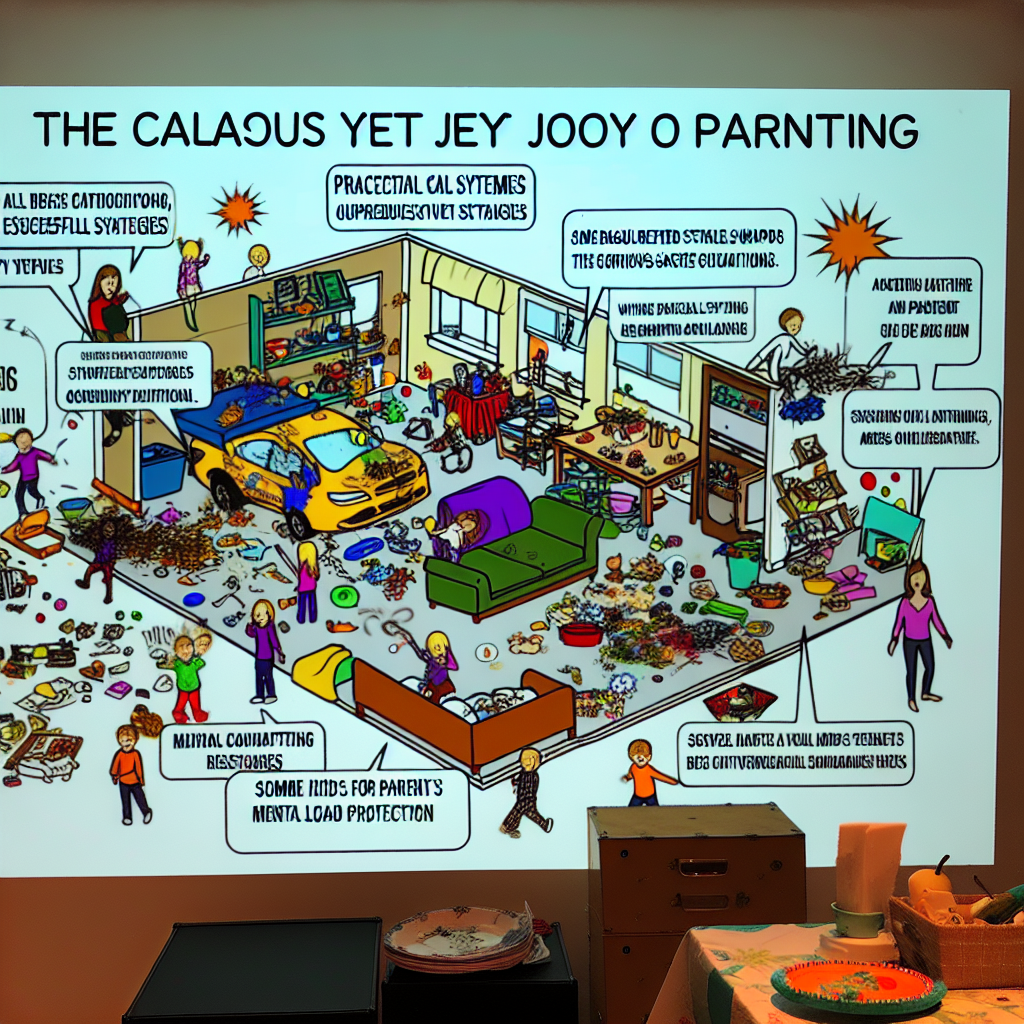
# Craft, Clutter, and Calm: How to Keep Kids’ Creativity — and Your Sanity — at Home
If your refrigerator resembles a modern-art gallery (with handprints, glitter and the occasional macaroni-taco hybrid), congratulations: you are parenting. I’ve been there — the kitchen table slick with paint, the afternoon I attempted an elaborate Pinterest castle that lasted 15 minutes before being repurposed as a hat. There’s joy in the chaos, but there’s also the slow erosion of patience when every day feels like damage control.
Here’s the thing I’ve learned: you don’t have to choose between honoring your kid’s creative mess and staying functional. With small systems, permission to fail, and tiny slices of self-care, you can keep the magic and reclaim your headspace.
## Make crafting doable (and actually fun)
Big, elaborate projects rarely survive small attention spans — or tired parents. Short, predictable crafts win. My rule of thumb: if it’s not doable in 15–30 minutes, it’s a planning-session-and-you’ll-regret-it project.
– Keep a “grab-and-go” craft box: stickers, washable markers, glue sticks, pre-cut paper, a handful of googly eyes and ribbon. When my kids are restless, I pull the box instead of negotiating a forty-minute setup.
– Theme one evening a week as “mini art night.” It’s low-pressure and something everyone looks forward to. We pick a theme (space, animals, favorite color) and let it run for half an hour while dinner simmers.
– Use what you already have: cereal boxes become castles, old magazines make collages, sticks and leaves become paint stamps. Cheap materials + imagination = enormous satisfaction.
– For toddlers, sensory play is gold: colored rice in a bin, finger-paint sheets inside a large plastic tub, or frozen paint cubes that melt into abstract masterpieces. Less cleanup than you’d expect, and endlessly repeatable.
Confession: I once spent an hour prepping a “fancy” salt-dough project only for my kid to lose interest after the first poke. Lesson learned: simple is not a consolation prize — it’s survival strategy.
## Display and archive without drowning
You want to celebrate their creations without your house turning into a paper landfill. Here are systems that honor the art without forcing you to keep everything.
– Rotating gallery: string a line across a wall, use clothespins, or have a magnetic board. Swap art weekly. The display makes each piece feel special and limits the keep-for-ever impulse.
– Photograph everything: a quick phone photo takes 10 seconds. Store in a dated folder or an app. Once it’s photographed, it’s easier to let the physical piece go.
– Annual photo book: pick the best pieces each year and make a compact book. Grandparents love them. Your basement doesn’t.
– One portfolio box per child: keep the truly special things (first handprint, a masterpiece that shows growth). When the box is full, it forces a choice — and that boundary is a kindness.
– Repurpose favorites into gifts: laminated placemats, cards, framed collages. We turned a rainbow of toddler fingerprints into holiday placemats and received exactly the emotional sobbing from relatives you’d hope for.
## Rethinking holiday treats (for allergy-safe fun)
Holidays can be fraught if your kid has allergies, but magic doesn’t require candy. We tried a neighborhood “safe house” one year and watched kids trade glow sticks like currency. It was brilliant.
– Designate a safe-house for trick-or-treaters or host a small, allergen-free swap with neighbors.
– Offer non-food treasures: stickers, temporary tattoos, glow sticks, bubbles, mini toys, crayons, or packets of seeds. They’re cheap, fun and inclusive.
– If you make homemade treats, label them clearly and clear recipes with your pediatrician.
– Teach older kids the swap: have a “trade pantry” of safe options so they can swap questionable candy at home.
## When the clutter is actually your mental load
The crafts themselves are one thing — but the endless decisions, cleanup, and invisible labor add up. That’s the part that often knocks me over.
– Schedule tiny breaks: even 10–15 minutes to sit with coffee, read, or breathe is a reset. I set a timer and let the kids do an independent play window while I recharge.
– Share the load: ask partners to take an evening of crafts, a bedtime routine, or a tidy-up shift. Trade time, not resentments.
– Outsource decision-making once a week: Sunday night batch the week’s crafts, outfits, and snacks. It takes 20 minutes and saves a dozen micro-stress moments.
– Drop perfection: Pinterest-level outcomes do not equal parently love. The messiest projects are often the ones kids remember.
I’ll own a fail: I tried to orchestrate a Montessori-themed craft day and spent the whole time policing tiny pieces while my own patience evaporated. We now have a simpler rule: safety first, and if it’s not fun for me, it’s probably not fun for them.
## Find joy without guilt
If you feel guilty for not loving every sticky, chaotic minute — join the club. Joy is quieter than social media suggests. It’s a walk that becomes a ritual, a three-minute song before bed, a shared ridiculous joke.
– Anchor a small daily ritual: a morning song, a park walk, a bedtime snuggle. Tiny routines accumulate into meaningful connection.
– Keep one thing that’s only for you: a podcast, a weekly coffee, a short run. You are not a vessel whose sole purpose is cleanup.
– Use your community: swap ideas in neighborhood groups or with friends. The best hacks I’ve learned came from another frazzled parent.
– Celebrate the small wins: did nap time stretch? Did you photograph five artworks this week? That’s progress.
## Takeaway checklist
– Set up a small craft corner and a weekly “mini art night.”
– Photograph artworks and create an annual photo book; keep one portfolio box per child.
– For allergens, prioritize non-food treats and consider a safe-house option.
– Schedule micro-rests, share cleanup duties, and batch decisions once a week.
– Build tiny daily rituals that help you feel joyful and seen.
I’ll end with the most important permission: it’s okay to pick a painting over two minutes of peace. Creativity is meant to be messy, shared and sometimes quietly archived. We’re allowed to love the chaos and protect our sanity at the same time.
What small system has saved your sanity — or what glorious craft disaster are you still laughing about? Share below and let’s trade war stories (and stickers).