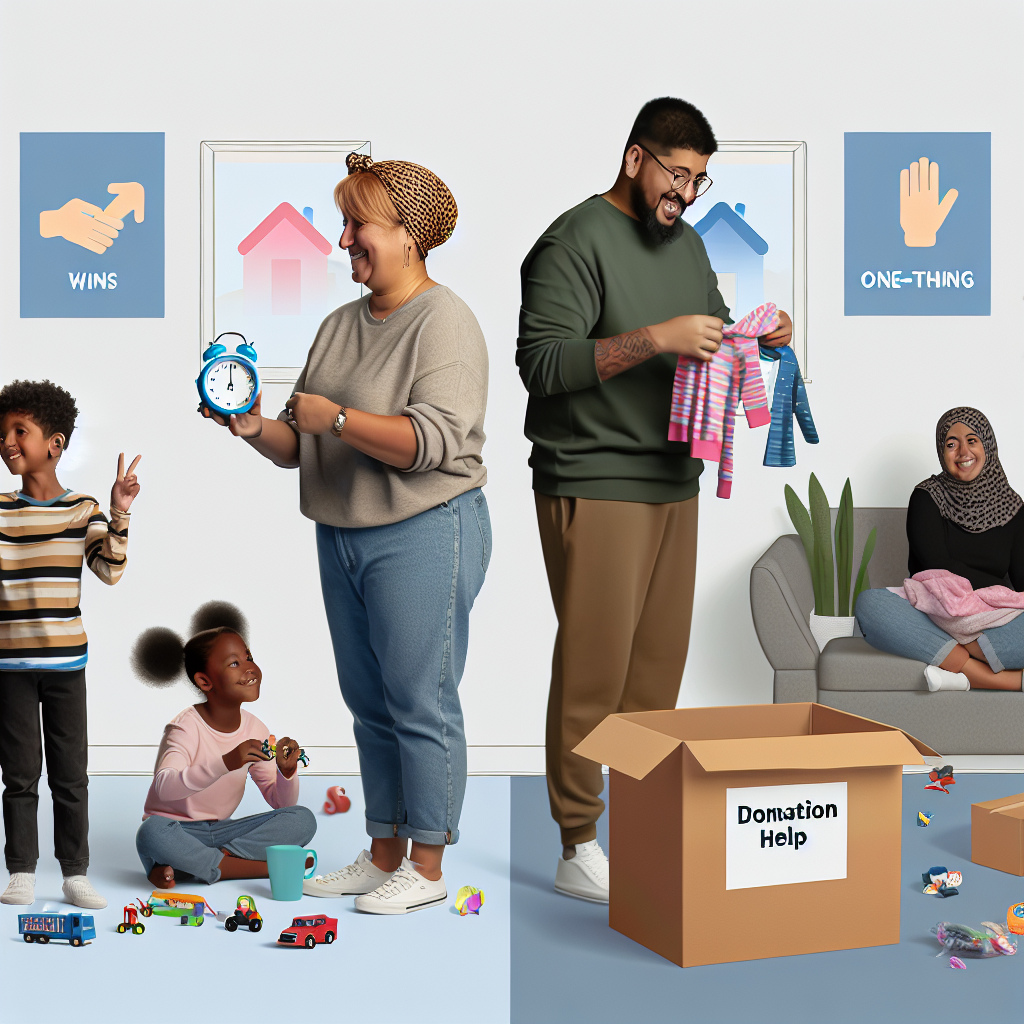
# Tiny Wins, Big Relief: How Small Decluttering Habits Save Sanity (and Space) for Busy Parents
If parenting has taught me one thing (besides how to change a diaper in the dark), it’s that big goals are best broken into tiny chunks. That applies to sleep, meal prep, and yes—decluttering. You don’t need a weekend marathon, a minimalist epiphany, or an Instagram-ready before-and-after to feel better in your home. You need a few small, repeatable habits that fit into the pockets of chaos between soccer practice and bedtime stories.
## Start with “just one thing”
Here’s a parenting truth: sometimes getting anything done at all feels like a win. So make the first rule embarrassingly simple—do one thing. Toss the empty snack wrapper on the coffee table. Clear the junk drawer. Return one stray charger to its home. Some days that single action is your whole victory. Other days it sparks momentum and you end up tackling the whole pile of library books you’d been ignoring.
The power is consistency, not intensity. When space is limited and sleep is even more limited (hello, newborn days), that tiny habit keeps progress doable and guilt-free. It trains your brain to spot clutter and handle it swiftly—small wins that add up without draining your time or energy.
## Make quick wins part of your routine
Timers are magical. Set a 10- or 15-minute timer and focus on one zone: the car, the diaper bag, the kitchen counter. Short bursts are low-commitment but high-impact; they shave off mental load and give you visible results fast.
Real-life win: a friend of mine had turned her car into a mobile landfill—claim tickets, crayons, half-eaten granola bars, you name it. She scheduled a two-hour window, shoveled everything into bags, found four bucks in an old cup holder, and walked out feeling lighter. The small time investment paid back in calm and the joy of not backing up a stroller while fishing for keys.
## Toss without guilt (and let kids help)
Decision fatigue hits hard when you’re sorting a pile of stuff, especially sentimental things that come with family history and emotional price tags. Use a simple rule: if you haven’t used it or thought about it in a year, it’s probably okay to release. Be decisive—drop it in the bin or donation pile without second-guessing.
Invite the kids: make decluttering a mini project. My kid helped turn a bag of too-small clothes into rags for a messy backyard paint day. He felt ownership, I got less laundry, and nothing important got tossed. Repurposing can be a win-win—teach creative reuse rather than harsh rejection.
## Tackle storage headaches together
Storage units can feel like emotional landfills—things you thought you needed, trophies from phases you’ve outgrown, and a monthly bill you keep paying out of inertia. Helping a loved one empty a unit can be hugely freeing: you clear space, cancel a fee, and offer the emotional support that often makes tough decisions possible.
One family I know cleared out a unit in a day, donated what was still useful, kept a handful of meaningful pieces, and closed the chapter. The relief wasn’t just physical—canceling the monthly fee felt like reclaiming part of their life.
## Use community resources (and be kind)
Neighborhood groups, buy-nothing pages, local shelters, and textile recycling centers are gold mines for getting rid of stuff responsibly. Before posting in a community group, check pinned resources—many have donation lists, pickup rules, and recommendations for where to drop specific items.
When you post, be specific and kind. Mention pickup details, condition of items, and whether you’ll accept self-collection only. And remember: moderators keep groups healthy—flag posts that are unsafe or off-topic rather than escalating.
## Practical tips that actually work
– Keep a donation box visible. When it fills, schedule a drop-off. Out of sight is out of mind—keep it where you see it.
– One-in, one-out for kids’ clothes. When something new comes home, let one old item go.
– Use a “maybe” bin for sentimental items. Revisit in 6 months—if nobody claimed it, let it go.
– Set realistic goals: 10 minutes at bedtime, a 15-minute weekend blitz, or one category per month (toys, mail, chargers).
– Use found money as motivation. Discover $12 in a coat pocket? Celebrate with a small treat or stash it toward a family goal.
## Wins, fails, and the messy middle
I have a confession: I once tried a full-on Marie Kondo weekend and lasted six hours before we all collapsed—kids hyped on sugar, husband immobilized by sentimental resistance, and me more exhausted than before. The house looked…like someone had rearranged the chaos. The lesson: massive projects often fail because life happens.
On the flip side, a 10-minute nightly tidy—everyone picks up one thing—has been a quiet miracle. It’s small enough to actually happen and somehow makes mornings less flurried. Wins are usually incremental: a cleared counter, a lighter garage, a storage unit canceled.
## Why it matters
Decluttering isn’t shallow aesthetics. Fewer visual cues of unfinished tasks reduces stress. Less stuff means less time spent fixing, hiding, or searching. That translates to emotional breathing room—time and energy you can spend on the kids, on work, or on a nap that doesn’t require strategic negotiation.
For busy families juggling careers, childcare, and the relentless accumulation of stuff, tiny habits compound into real change.
## Takeaway
You don’t need a perfect system or a magazine-worthy result to feel better. Start with one thing—really—then build on the momentum. Celebrate the little victories, let kids help, use community resources wisely, and remember that decluttering is as much about lightening your load as it is about creating space for the life you actually want.
What small decluttering habit has actually worked (or failed spectacularly) for you? Share your tiny wins, your best tips, or your funniest mess-to-miracle moments—I want to hear them.