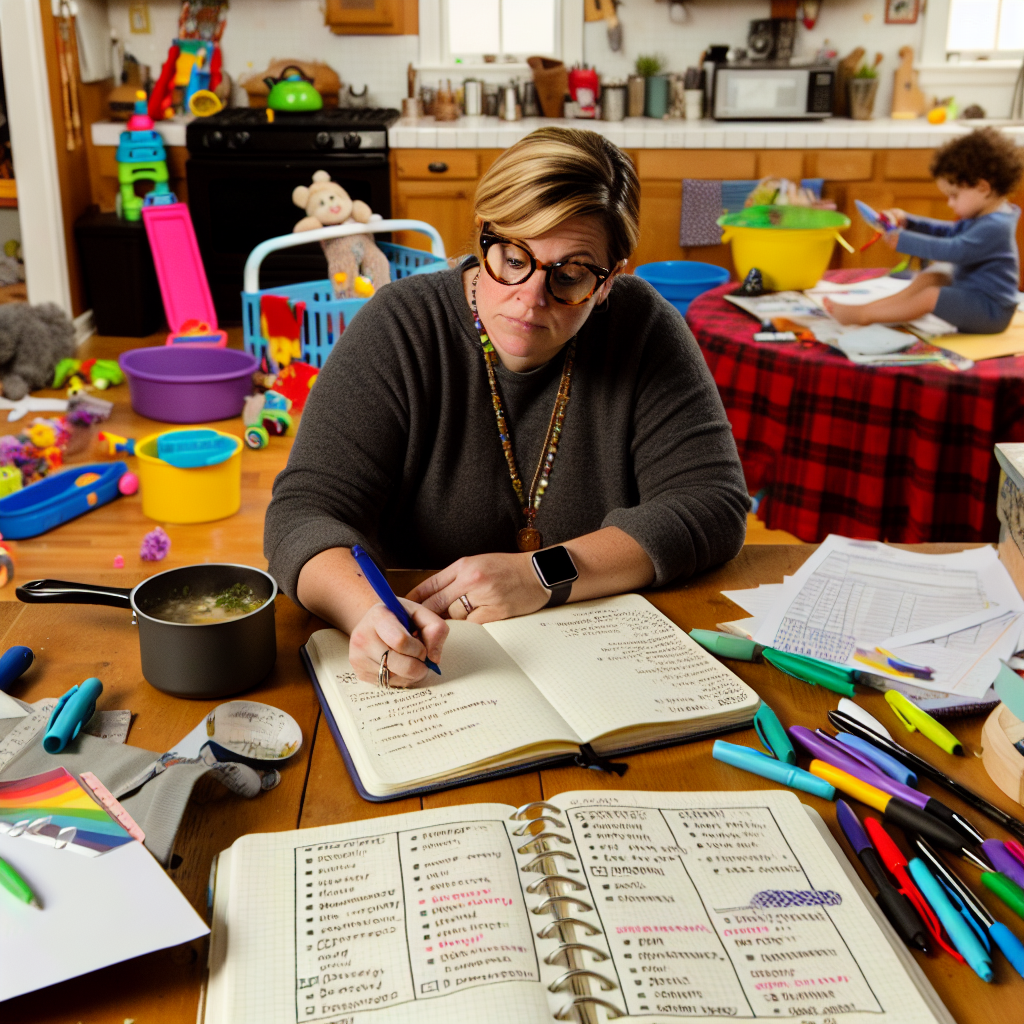
# The Busy Parent’s Guide to Bullet Journaling: Simple, Creative, and Actually Doable
If you’re a millennial parent, the idea of starting a bullet journal probably sounds dreamy and chaotic at the same time. Dreamy because it promises a little corner of calm and creativity. Chaotic because who has time between diaper changes, preschool drop-offs, and figuring out what’s for dinner? Spoiler: that same journal can be a lifeline for logistics, a creative escape, or both — and it doesn’t need to overthrow your life to be useful.
I started my bujo during a particularly loud week: the baby had discovered how to launch cheerios like confetti, my kindergartner decided pants were optional, and my work calendar and grocery list were both pleading for mercy. I grabbed a dotted notebook and a pen and made one tiny spread. Ten minutes later I felt like I’d found a tiny island of calm in the chaos. That was the win. A few weeks later I paid $20 for a sticker pack, never used most of it, and then cried over spilled coffee on a masterpiece weekly layout. That was the fail. Both are true. Both are part of the story.
Start small: how to begin without overwhelm
You do not need a shelf full of supplies or a degree in calligraphy.
– Begin with one spread. Weekly layout for appointments and meal plans is gold. Or try a single habit tracker for water and sleep. One spread = one problem solved.
– Use pencil first. Sketching layouts takes the pressure off and lets you try out what actually fits your life.
– Keep a short list of prompts for a quick check-in: What matters this week? What must get done? What’s one tiny win I can celebrate?
Ten minutes after lunch can be enough to set up the week. Promise.
Shop smart: avoiding the supply trap
Gorgeous washi tape and sticker hauls are fun — and a budget trap. I am guilty. We all are. Treat collecting like a hobby, not a requirement.
– Core kit: dotted notebook, one reliable pen, a highlighter, and a small set of colored pens. That’s it.
– Limit splurges to once a month and put it on the calendar. If you love shopping for supplies, make it intentional so it doesn’t become a creeping expense.
– Reuse: leftover stickers, ripped fabric, and magazine clippings will give you texture and personality without buying new stuff.
If you like to share your stash on social media, keep a single page called haul so you don’t accidentally rebuy something later.
Make it fit your time: artful or efficient — you choose
You’ll see Instagram spreads that look like tiny works of art. They are beautiful. They are also optional.
– Artistic approach: pick one longer session a month — a babysitter night, a nap day, or the one hour you trade for date night — to make a showpiece spread. It can be cathartic.
– Efficient approach: create templates to copy weekly, use printed labels, and limit yourself to a 10–15 minute nightly routine to update tasks and reflect.
– Combo: reserve one small page per week for a sketch, a gratitude line, or a sentence about the day. Keep the rest practical.
If you’re documenting for an audience, remember that filming and editing double the time required. It’s okay to keep some journaling private.
Themes without the splurge
Themes can be fun motivation. They don’t require a new shopping cart.
– Pick one motif from your existing stash and run with it. One washi roll + one sticker pack = a theme.
– Swap with friends. There are thriving parent groups that trade supplies.
– Use household items: a leaf from a walk, a swatch of fabric, or a magazine cutout can add texture and memory.
A theme should spark joy, not debt.
The one page every family needs: emergency info
Make this spread. Make it simple. Make it practical.
– Title it clearly: In Case of Emergency.
– Include medical notes (allergies, chronic conditions), key phone numbers, workplace contacts, insurance info, where important documents live, and any babysitter instructions.
– Think access: how to unlock devices, where spare house keys are, and a simple map to your house if needed.
Privacy matters. Keep this page in a secure spot and let one trusted person know it exists and where to find it. If your journal leaves the house, make sure your emergency contact has the necessary info somewhere else (sealed envelope, secure digital note).
Make journaling a family-friendly habit
Turn the bujo into something kids can touch without taking over. Older kids can decorate a monthly cover. Toddlers can slap on stickers. Use a weekly page where each child draws the day’s highlight. It’s planning and connection, wrapped in glue sticks.
If you’re struggling to keep it going, treat journaling like family hygiene: schedule it, protect that time, and celebrate small wins. Even five minutes after teeth-brushing to write one sentence about the day will make tomorrow feel a little smoother.
Wins and fails: honest examples
Win: I used a weekly spread to communicate shared childcare with my partner. It reduced ‘Who does pick-up?’ texts by 90 percent. Small miracle.
Fail: I once spent a blissful Saturday creating an intricate habit tracker only to realize I had never defined what success looked like. Result: pretty dots, no behavior change. Lesson learned: clarity beats decoration.
Takeaway
Your bullet journal is a tool, not a project that consumes you. Start simple. Buy intentionally. Carve out one small creative space. Make the emergency page. Invite the kids in when it helps, and let the rest be imperfect.
I’ll leave you with the question I ask in my parenting group whenever someone hits a wall: what one tiny, doable thing could you add to your week that would make the next day easier? Share it — let’s build a list of small wins together.