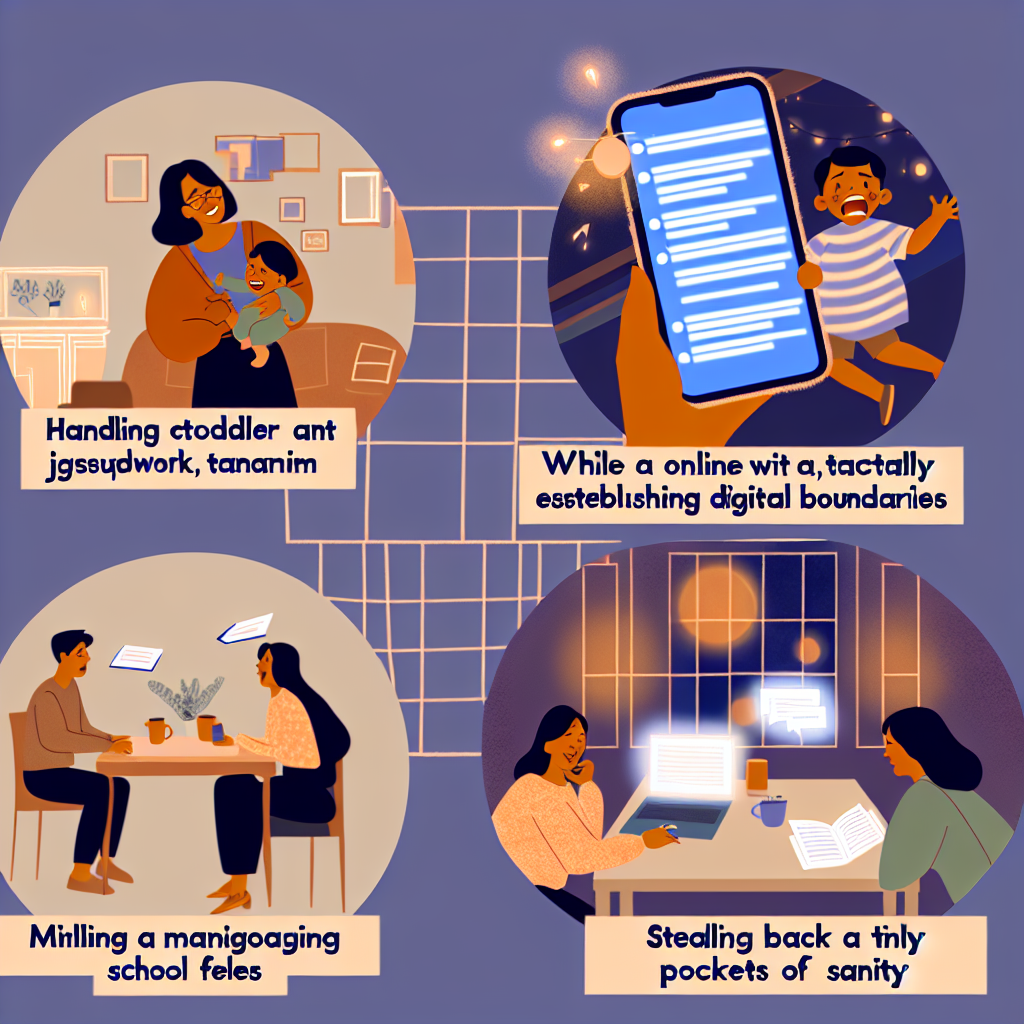
# When “Too Much” Feels Permanent: A Real, Practical Guide for Millennial Parents
Parenting is weirdly repetitive chaos with better snacks. One minute you’re celebrating a daycare victory (they actually put on shoes!), the next minute your inbox looks like a solicitor convention and your partner has invited their aunt to stay for “a couple days” that turn into a fortnight. If you’ve ever whispered into your coffee mug, “Is this the rest of my life?”—same. But we can make the rest-of-life feel less permanent and more manageable.
## Why community rules and boundaries matter
Online parent groups are lifesavers. They’re where you ask whether an avocado rash is normal, find a stain-removal hack, or borrow a stroller at midnight. But group rules aren’t bureaucratic nonsense — they’re the guardrails that stop good intentions from turning into real harm.
Moderators limit fundraising posts and medical advice not because they’re party poopers, but because you can’t verify a diagnosis in a comment thread. If you use groups, protect your privacy, report sketchy posts, and use the space for what it’s meant to do: crowd-sourced empathy, logistical help, and the occasional hilarious meme when bedtime falls through.
In the same way, your household needs rules. Boundaries around finances, privacy, screen time, and guests protect your emotional bandwidth. They aren’t mean; they’re the infrastructure that lets you function.
## A quick story: when “visiting” becomes “extended residency”
We once had my sister-in-law drop by “for a weekend” during our newborn haze. She arrived with casseroles and stayed until she’d memorized our grocery list. I felt grateful and quietly furious. That simmering resentment turned every interaction sour. The solution wasn’t passive-aggressive hints or a dramatic text blast — it was a one-sentence boundary that saved my sanity: “We love visits, but we can only host overnight guests for two nights at a time while we adjust.”
It felt boring. It worked.
## How to set boundaries with visiting family (without burning bridges)
If family visits are recurring stressors, try a repeatable approach you can actually use when you’re tired:
– Decide your non-negotiables. How many nights is okay? What months are off-limits? Pick one or two rules you can enforce.
– Communicate early and specifically. “We’d love to see you, but we can’t host overnight guests in December.” Say it before plans firm up.
– Offer alternatives. Suggest a hotel nearby, an afternoon visit, or a parking-lot handoff for grandparents who want grandkid time.
– Stay united. Agree on boundaries with your partner and present a joint front. Mixed messages become resentment fast.
You’ll feel a pang the first few times someone’s feelings get ruffled. That’s normal. The alternative is ongoing erosion of your home life.
## Sitting your partner down: holding that tough convo
If you’re the one stuck juggling the fallout from family visits, you need a calm, structured talk with your partner.
– Use “I” language. “I felt overwhelmed when plans were made without asking me. I need X month to be family-only for our household.””
– Bring specifics and solutions. Propose a simple calendar, a max-stay rule, or a requirement that major hosting decisions are mutual.
– Expect messy compromise. Your partner’s emotional ties might be different from yours — that’s not a defeat for your needs, it just means the middle ground will be weird sometimes.
– If talks loop, try a cooling-off period and schedule a short, focused check-in instead of nightly rehash.
I once timed our check-in: 15 minutes, no interruptions. We wrote one sentence each and left. It felt revolutionary.
## When school “extras” become a financial hardship
School fundraisers, spirit days, and optional field trips add up. If the cost-of-entry for “fun” is stressing you, here’s how to respond without shame:
– Talk to the teacher privately. Say you want your kid to participate but fees are hard. Many teachers quietly offer alternatives.
– Ask about discretionary funds. Some schools or PTAs have emergency money for families who need it.
– Offer low-cost alternatives. A homemade cookie or volunteering during the event often gets your kid included.
– Pool with other parents. Swap costumes, carpool, or trade favors.
– Advocate together. If lots of families are squeezed, bring it to a PTA meeting. Policy change happens when people organize.
One win: I offered to manage a clothing swap at school and suddenly a whole bin of costume stress disappeared.
## Tiny sanity-saving moves that actually work
When the toddler won’t sleep and your partner wants you to “relax” while doomscrolling continues, micro-strategies are your friends:
– Schedule non-negotiable micro-breaks. Ten minutes to read, 20 to nap, or one TV episode after bedtime. Make it a shared rule.
– Create a “pause” signal for partners. A word or gesture that means “I need uninterrupted time” can prevent accidental sabotage.
– Automate kindness. Meal planning, grocery delivery, and a shared family calendar cut down friction.
– Normalize imperfect days. Some nights will be awful. Tomorrow isn’t a verdict on your parenting.
And please: if you find a ten-minute meditation that actually works while holding a toddler? Tell me immediately.
## Wins, fails, and the whole messy middle
I celebrate wins — like the time I taught my kid to put shoes on the right feet — and confess fails, like the many times I agreed to host “for a weekend” and ended up resenting every casserole. The point is not to be perfect; it’s to try small, sustainable fixes and give yourself credit when something goes right.
Boundaries feel awkward at first. They’ll feel less awkward after you’ve used them three times and they prevent one or two family blow-ups. That’s called progress.
## Takeaway
You don’t have to fix everything now. Boundaries — online and off — protect your family’s emotional bandwidth. Clear, early communication and tiny, practical solutions for school costs and hosting reduce recurring stress. When you’re wrecked, ask for help, take a micro-break, and remind yourself: you’re doing the ordinary, heroic work of raising humans. That deserves grace and maybe a small dessert.
What boundary or tiny sanity-saving trick actually changed your family life (or spectacularly didn’t)? Share the win, the fail, or the hilarious middle — let’s build the strategies that make the day-to-day less permanent and more livable.