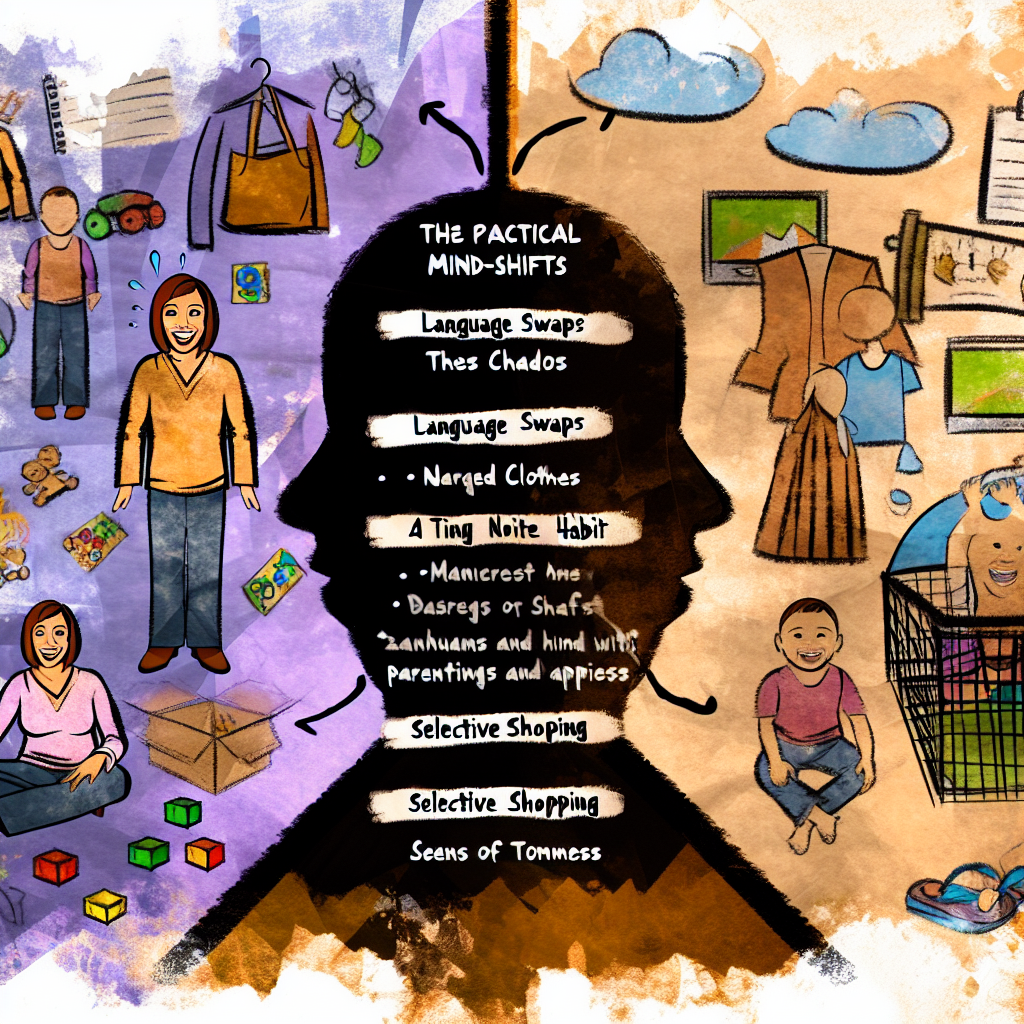
# Parent Without the Guilt: Tiny Mindshifts That Free Up Time, Calm, and Joy
Parenting often feels like wearing a to-do list on your forehead while juggling laundry, emails, and a small human who insists socks are a food group. I know this because I have been that disheveled human: late to preschool with a mismatched shoe, clutching a coffee gone cold and a sense that everything I do is slightly wrong.
Between the endless scroll of advice, well-meaning but intense group chats, and the internal monologue that loves to declare defeat, it’s no wonder so many parents move through the day apologizing for existing. I started trying tiny swaps to quiet that noise — not to be perfect, just to be less exhausted by the background shame. Here are the moves that actually helped me, plus the parts where I spectacularly failed so you don’t have to learn everything the hard way.
## Say ‘thank you’ more than ‘sorry’
I used to apologize for everything. Literally. Running late because of a diaper blowout? Sorry. Asking for help? Sorry. Taking a seat on the bench at the playground? Sorry, sorry, sorry.
Then I tried something that felt deceptively small: swap an automatic sorry for a simple thank you. Instead of saying sorry to the teacher for being ten minutes late, I started saying, “Thank you for waiting.” Instead of apologizing for the Lego island on my living room floor, I said, “Thank you for helping me pick these up.”
Why this works:
– It moves the energy from self-blame to appreciation.
– It models gratitude instead of a constant script of self-criticism for our kids.
– It reserves apologies for real harm, which makes them mean more when they do happen.
Win: My partner noticed I sounded calmer on the phone. Fail: The first time I tried it in a rush, I accidentally said, “Thank you for waiting, sorry,” and then we both laughed. Progress, not perfection.
## Boundaries still mean real apologies when they matter
Clarification: this isn’t about avoiding responsibility. If you hurt someone, apologize sincerely. The point is to stop apologizing for taking up space, for needing help, or for being human. That distinction makes accountability feel real again.
## Write your excuses down — then reread
Our brains are professional excuse factories: I’ll do it tomorrow, I need more energy, I need the perfect plan. So when procrastination shows up, I started a tiny ritual: write the excuse down in my notes app, then go back and read it five minutes later.
How to try it:
– Keep a “reasons not to” note in your phone.
– When you catch yourself avoiding something, type the excuse exactly as it pops into your head.
– After a few minutes, read it back. The brain often sounds sillier in text.
– Decide: act for five minutes, schedule it, or let it go.
Parenting example: Papers for school keep piling up. I wrote down: “I’ll do it when I have a clear hour.” Reading it back made me realize I was using the perfect-hour myth as a delay tactic. I set a five-minute timer and shredded three forms. Micro-wins stack.
Fail: I once wrote “I’m too tired” and then took a nap instead of doing the one-minute task. The nap was deserved, but I learned to be honest with myself: was I tired or avoiding a boring chore?
## Buy less, choose better
Impulse buys are emotional: you picture the playdate, the neat solution, the outfit that will make life easier. I’m not immune — I once bought a “stain-proof” couch cover in a wild midnight shopping moment because the ad featured a baby laughing. It arrived, lived in the closet, and reminded me of my impulse.
Simple rules that helped:
– The 24-hour rule for nonessentials.
– Wishlist it and revisit monthly.
– Two-question test: Do we need this? Will it replace or outshine two things we already have?
– Space check: if new stuff crowds the house, it’s probably not a win.
Result: Fewer clutter regrets, more money for actual fun things like a family day out.
## Protect your parenting community
Playgroup chats can be amazing and exhausting. I’ve been the organizer who burned out from planning snacks, schedules, and holiday swaps. Communities thrive with clear boundaries — a gentle “no politics” rule, for example, keeps a group focused on support and recipes instead of division.
If you’re leading: know when to step back. Stepping down doesn’t mean you failed — it creates room for new voices and keeps the group healthy.
If you’re participating: be kind, contribute small things, and say thank you to the people who keep the group running.
Fail: I once tried to mediate a group debate over whether gluten-free cupcakes belonged at our potluck. Spoiler: I ended up exhausted and the debate lasted longer than the party.
## Quick checklist to try this week
– Swap three automatic “sorry”s for “thank you”s. Set a reminder if it helps.
– Start a “why I’m avoiding this” note and write one avoidant thought when it comes up.
– Use the 24-hour rule on one nonessential purchase.
– If you’re in a parenting group, suggest one boundary that would make the space kinder.
## Takeaway
Tiny habits pile up. One word change, one short note, one pause before buying — they won’t fix everything, but they chip away at the background noise of shame and rush. For parents juggling work, kids, and the million small decisions that come with them, these mindshifts carve out a little more mental space for joy.
I say this as someone who still trips over stray toys, forgets to reply to texts, and occasionally eats cold dinner while supervising craft projects. The goal here is not perfection. It’s kindness to ourselves and smarter, smaller moves that make the day softer.
What tiny swap helped you the most this week, or what small change are you willing to try tonight? Share one thing — win or fail — so we can learn from each other.