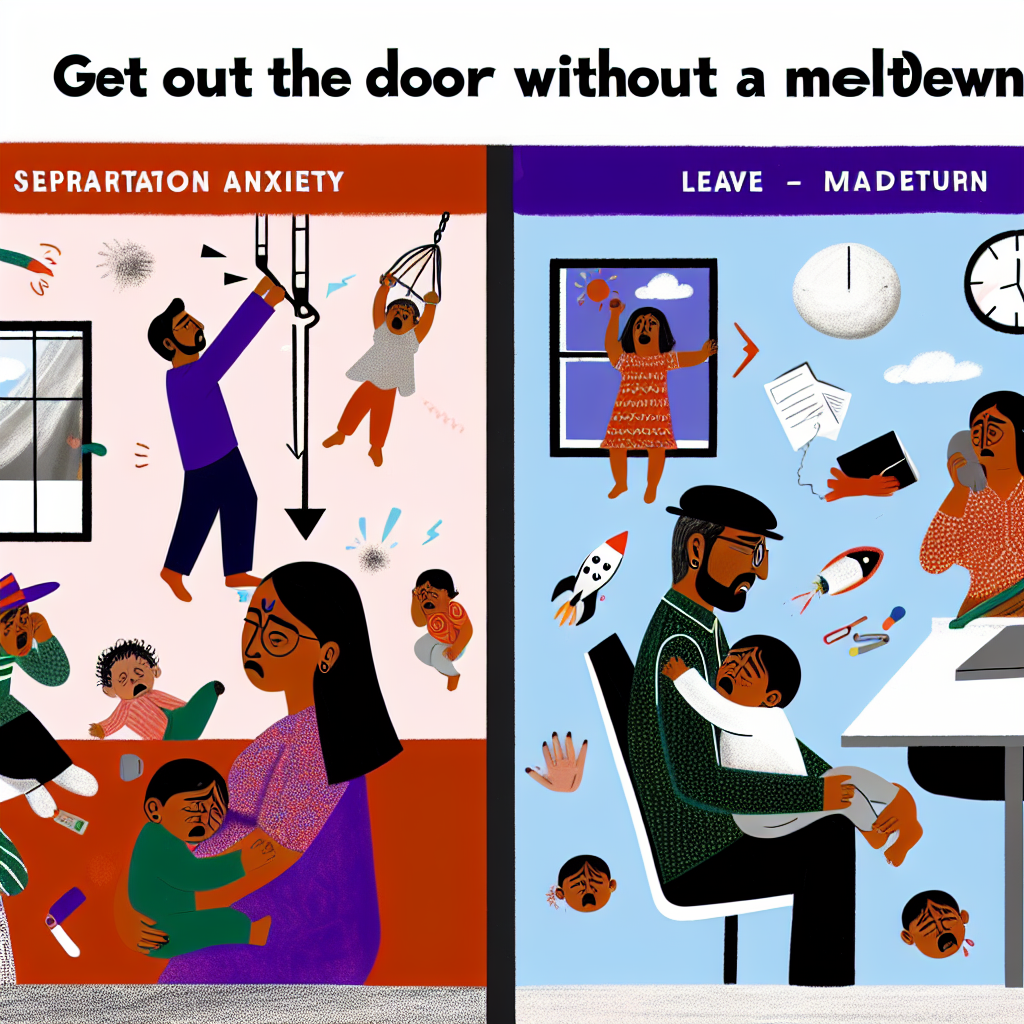
# Leaving the Nest (Gently): How to Handle Separation Jitters When Your Little One Clings Tight
If your baby loses their mind the second someone else tries to hold them, you are not alone. Picture this: I hand Mia to Grandma, take three steps back, and suddenly it sounds like the house is being burgled. You know, the kind of cry that makes you sprint back despite every ounce of rationality telling you to stay put. Heartbreaking, noisy, exhausting—and totally normal.
Around 6 to 9 months many babies hit peak stranger and separation anxiety. Their brains are doing important developmental work: attachment, object permanence, and the thrilling realization that you can actually leave the room. It’s not a personality flaw, and it’s not a reflection on your parenting. It just feels personal, because it is personal.
Here’s the real, messy truth: practice helps. But so does permission. Permission to fail, to laugh (sometimes hysterically), to try again tomorrow.
## My worst, most human moment
I once tried a dramatic exit because I was late for a hair appointment and thought I was being clever. I told Mia a sappy goodbye, blew a kiss, and bolted like a spy. She watched me go, then performed the single most theatrical wail of her tiny life. I stood on the sidewalk texting my partner like a villain, ashamed, while a neighbor gave me the sympathetic laugh. Not my proudest moment. But that ridiculous run taught me two things: 1) I am not a villain; and 2) dramatic exits make everything worse. Calm and predictability work a lot better.
## Gentle ways to practice separations
Think small, predictable, and boring. Babies learn from repetition.
– Short, predictable separations: Start with leaving for a minute or two. Come back cheerful. Repeat. Gradually increase the time. The goal is a string of calm experiences where they learn you always return.
– A leave-and-return ritual: Pick the same little cue every time. A two-second hug, a silly song, or a whisper of I love you. Rituals give babies a script and lower panic.
– Stay nearby at first: Let Grandma or a sitter play while you’re in the room. Then step out of sight for a minute, then two. Fade your presence slowly so it feels like a harmless experiment, not an abandonment.
– Practice with different people and places: The more varied the safe experiences, the more flexible your baby gets. But do it during low-stress windows — not the middle of a deity-level sleep regression.
– Keep calm and neutral: Babies are emotional sponges. If you stay relaxed and matter-of-fact, they often mirror that energy. Avoid apologies that fuel drama; a simple, confident goodbye is kinder.
## Tips for breastfeeding and co-sleeping families
If you nurse to sleep or cosleep, handing your baby off can feel impossible. It’s okay to be protective. Here are realistic ways to build confidence without guilt.
– Early, short outings: An early dinner or a quick coffee is a good first win. You don’t need to vanish for the weekend to feel like yourself.
– Bring your scent: A shirt of yours, a familiar blanket, or a recorded lullaby reassures your baby when you’re gone.
– Practice the bottle gently: If pumping and bottles are an option, introduce them in relaxed moments so they’re not only used in emergencies. If bottles aren’t your thing, that’s fine too — do what works.
– Hybrid approach: If full nights away are unrealistic, aim for short, frequent breaks. Small, repeated separations build trust for both of you.
## For working parents and grandparents who help out
Consistency is your friend. If someone is in your home regularly, make it predictable.
– Let the caregiver lead while you’re still visible, then step away briefly for a phone call. Build up to longer stretches.
– Give caregivers a small script: two songs, a game, and a comfort trick. Babies thrive on predictable interactions.
– Schedule check-ins: If you can pop in for a nursing break or a quick cuddle, it can bridge the gap and build trust for longer stretches later.
– Reassess timing: There’s no rule that says you must do long separations at a specific age. If it’s traumatic, pause and try again in a few weeks.
## Managing your own anxiety
Parents often carry more stress about separation than the babies do. It’s normal to worry, but you deserve time too.
– Normalize the discomfort: Wanting an hour to yourself doesn’t make you a bad parent. It makes you human.
– Use support: Bring a partner for moral support on your first few tries. Debrief and celebrate small wins — even a ten-minute coffee counts.
– Tune your self-talk: Repeat practical facts: your baby has safe caregivers, you’ll come back, and this is usually a phase.
– Give yourself grace for the fails: You will do a clumsy exit, you will fret in the car, you will come back early. That’s part of figuring it out.
## Practical scripts and tiny rituals you can steal tonight
– The two-squeeze hug: two squeezes, whisper I love you, place baby with caregiver, step back casually.
– The leave song: a 10-second tune you sing every time you leave. It signals return because you always come back to finish the song.
– The scent swap: leave a small cloth with your scent in the crib or carrier, rotated daily.
– The sitter checklist: a one-page list with feeding, favorite games, and soothing tricks so caregivers feel confident.
## When to ask for help
If reactions are extreme — gagging, trouble breathing, or nonstop inconsolability — or if the anxiety persists long past the usual windows, call your pediatrician. They can rule out medical causes and point you to resources like parenting coaches or specialists who work with attachment and anxiety.
## Takeaway
This stage is noisy and tender and often hilarious in hindsight. Progress is usually tiny: a minute longer here, a nap that someone else gives there. Celebrate the small victories and befriend the failures; both are evidence you’re trying.
I’ll close with the thing I wish every parent heard when they hand their kid to someone else: you are allowed to want time away, and your child is allowed to miss you. That messy, mutual love is exactly the thing that proves attachment is working.
What small ritual or tiny win helped you get out the door for the first time, and what was hilariously, poignantly human about your attempt?