# Dinos, Daylight Savings and Dinner Worries — A Survival Guide for the Season
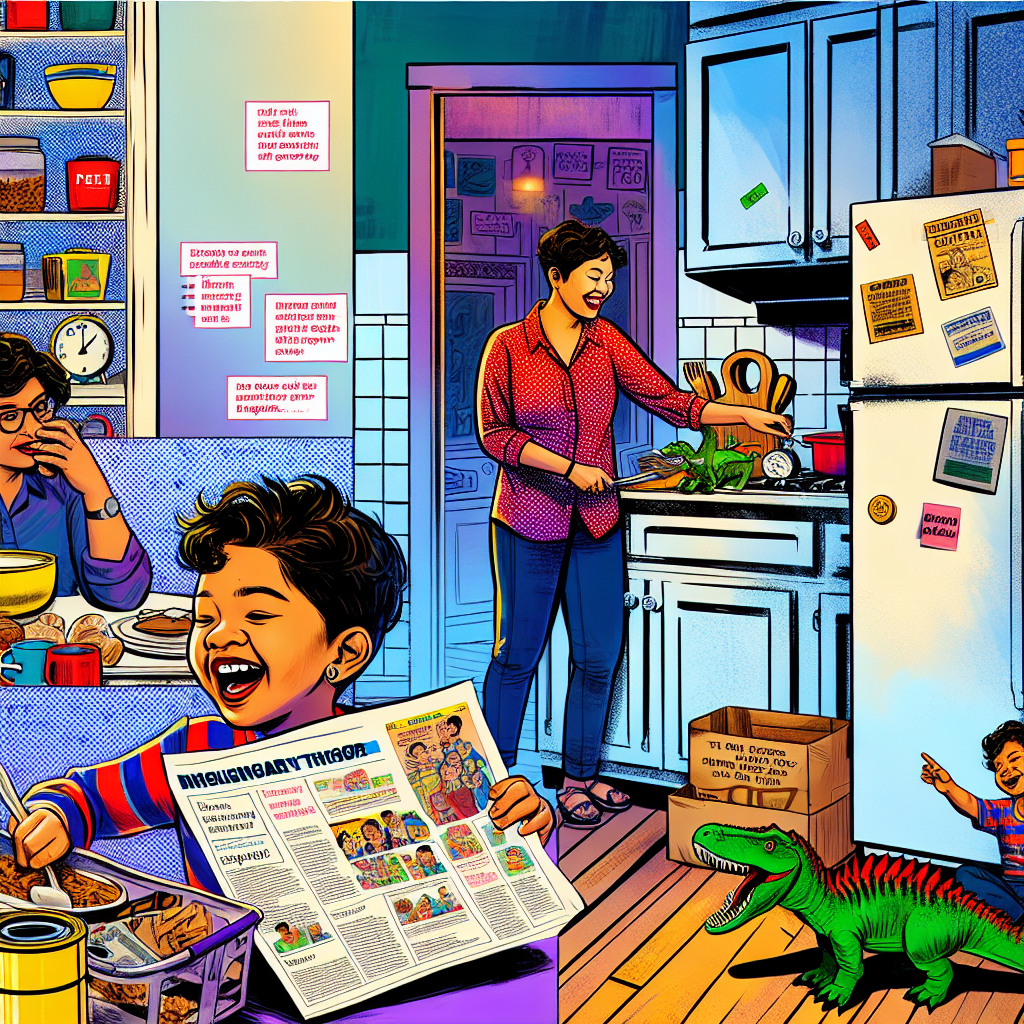
Parenting is a weird mashup of giggles and low-level panic. Yesterday my kid declared our cat to be a stegosaurus (the cat did not consent), and before I’d finished laughing she was up at 4 a.m. because daylight savings had apparently betrayed our household timetable. Somewhere between reciting obscure dinosaur names and trying to stretch canned beans to feed three more dinners, I remembered that this is the current season of parenting: gloriously absurd and sometimes quietly terrifying.
If you feel like you’re juggling with no net, I see you. Here’s what’s worked for me (and what hasn’t), all delivered with the frankness of a friend who’s had cereal for dinner more than once.
## When groceries are tight: ask for — and accept — help
Admitting you need help feels humbling, but it’s also practical. When our pantry went from “fully stocked” to “a can of tomatoes and optimism” overnight, I learned a few things:
– Be specific. A short, focused wishlist (milk, eggs, kid-friendly pasta, fruit) makes it way easier for neighbors or community groups to step in.
– Use trusted channels. School Facebook groups, local church bulletin boards, or verified neighborhood apps often run meal trains or grocery swaps. Read the group rules before posting — it makes everything smoother.
– Tap nonprofits. Organizations like No Kid Hungry or local food banks can be discreet and dependable supplements to short-term community help.
– Protect your privacy. Share only what’s needed and move any verification or arranging to private messages or moderator channels.
Asking for help isn’t failure — it’s resourceful. Most people want to help but don’t always know how.
## Find the funny — and save it for later
One of the best hacks for surviving rough weeks: collect the ridiculous moments. My phone has a folder labeled “Tiny Human Gold” filled with mispronounced dinosaur names, impromptu dance performances, and that time my toddler earnestly attempted to feed the goldfish a cracker.
On bad days, flipping through those saved clips recalibrates me faster than an extra cup of coffee. Lots of parenting groups have “funny moments” threads — they’re equal parts therapy and mood-booster.
## How to enjoy — and manage — a full-on dinosaur obsession
Dinosaur mania is basically a rite of passage. Instead of resisting, I try to channel it:
– Lean into learning. Library books, short museum trips, and one-off documentaries feed curiosity without turning screen-time into a babysitter.
– Rotate toys. Keep a small selection of dinosaur toys accessible and tuck the rest away — the novelty comes back when the rotation changes.
– Set gentle limits. If every meal becomes a T. rex banquet, give them a 20–30 minute “dino time” and then move to another activity. Predictability helps everyone.
– Celebrate the growth. These obsessions build vocabulary, memory, and focus — and that’s huge.
Yes, sometimes I’m the parent who finds a plastic triceratops in the shoe bin. But wins are wins.
## When clocks betray you: daylight savings survival hacks
Clock changes are the worst kind of practical joke. If your toddler wakes up an hour earlier, try small, patient moves:
– Shift bedtimes by 10–15 minutes over several days, not all at once.
– Use morning light. Open curtains or use a gentle wake-up lamp to help reset internal clocks.
– Protect naps. If naps go sideways, aim for a shorter, calmer nap rather than skipping it.
– Optimize sleep cues. Consistent rituals, blackout curtains, and white noise still matter — even when everything else feels chaotic.
If you’re staring at the ceiling at 4 a.m., swap childcare duty with your partner for a day or find a short, joyful distraction (a silly podcast or a new mug of coffee can feel like salvation).
## Meltdowns: keeping your cool when they lose theirs
Meltdowns are universal and inevitable. The goal isn’t perfection — it’s getting through them without losing yourself.
– Name the feeling. “You’re mad because we can’t have more cookies” gives a toddler language for big feelings.
– Offer a safe space. A cozy corner with a blanket or stuffed animal helps them learn to self-soothe.
– Try time-ins instead of time-outs. Sitting quietly with a child can be far more effective than sending them away.
– Pre-empt triggers. Keep an eye on hunger and sleep — those are meltdown accelerants.
– Pick your battles. Let the small stuff slide sometimes. It saves your energy for the big stuff.
I’ll be honest: I’ve handed over the TV for 15 minutes just to avoid a meltdown in the grocery store. Sometimes the small concession keeps the whole outing intact.
## Community is more than memes — it’s a lifeline
Parenting groups online can be silly and sacred. Use them wisely: follow rules, move sensitive details to private chats, and be specific and time-limited about needs. And when you can, give back — a bag of cereal, a restaurant gift card, or a helpful tip can mean more than you think.
Being reciprocal builds trust. The groups that have helped us the most are the ones where members also show up in small ways for each other.
## Work-life balance and keeping a sense of self
Parenting doesn’t have to erase identity. I sneak in micro-moments of myself: 10 minutes with a book, a midday walk, a phone call with a friend. They’re tiny, but they matter. If you work, communicate flexible boundaries when possible and protect at least one block of the day for recharge — even if it’s microwave-bathroom-level stealth relaxation.
I’ve had days of feeling like I was surviving, not living. The turning point is learning to accept imperfections and to celebrate the tiny wins: a meal made, a meltdown navigated, a bedtime that actually happened.
## Takeaway
Parenthood is a series of short-term fires with long-term rewards. When grocery budgets tighten, ask for help and lean on verified charities. When the clock betrays you, move slowly and stick to rituals. When meltdowns hit, offer presence more than punishment. And when your child is suddenly an encyclopedic dinosaur, laugh, record it, and use it as an opportunity to learn.
What’s one small parenting survival trick you swear by — whether it’s a snack that saves every outing, a bedtime ritual that finally worked, or a community resource that surprised you? Share it below; we can all use a few more tricks up our sleeves.